
How AI Powered Validation Prevents Economic Crime Act 2025 Penalties
Quick answer
AI-powered validation tools are crucial for ensuring compliance with the Economic Crime Act 2025 by providing robust document verification, minimizing errors, and effectively preventing penalties through automated risk management strategies. These tools ensure that every document aligns with new economic crime regulations, safeguarding enterprises from costly fines.
How AI Powered Validation Prevents Economic Crime Act 2025 Penalties
Imagine you've just stepped into the office, coffee in hand. On your desk is a document stack thicker than you remember, each page representing a potential compliance issue. The Economic Crime Act 2025 is in effect, and you’re responsible for ensuring your company avoids penalties. You think back to yesterday's meeting, where leaders emphasized the cost of getting it wrong. The anxiety of human error in document validation is a daily reality. It’s a grind that comes with high stakes.
Now envision a system that could handle the bulk of this validation without effort. An AI-driven process that not only reviews but understands the document context and ensures compliance without the human fatigue factor. This isn’t a far-off dream but a reality quickly gaining ground. With the right AI-powered tools, preventing penalties with document validation is not only possible, it's essential.
New Mandates Under the Economic Crime Act 2025
The Economic Crime Act 2025 introduces significant regulatory burdens. These new measures require businesses to enhance their document verification processes to prevent economic crime. Not adhering means costly penalties, damaging reputations, and potential legal concerns.
First, from my experience in finance technology and consulting, I see that the emphasis on compliance has never been greater. The Act mandates rigorous checks and balances for transactions and regulatory reporting. Second, costly penalties are a real risk. It demands companies provide clear and auditable trails of documentation to validate every economic transaction and process.
Third, these regulations emphasize tightening controls around financial transactions and ensuring the validity of supporting documents. Document verification in crime prevention, therefore, becomes a crucial process. AI's role in this verification is paramount, as it brings precision that manual reviews simply can't match.
AI-Powered Document Validation: The Process Explained
Understanding how AI tackles document validation reveals its true impact. AI methodologies focus on three main areas: data extraction, anomaly detection, and auditing trails. These elements ensure compliance with economic crime regulations.
First, AI employs context-based extraction. It isn’t limited to template boundaries but adapts to data formats, such as invoices, contracts, or financial statements. Second, the AI analyzes inconsistencies that indicate potential fraud or errors. This step is crucial for managing risk under the new economic crime laws. Third, it creates tamper-evident logs to verify each document's integrity and authenticity.
• Context-based data extraction
• Anomaly detection and risk assessment
• Tamper-evident logs for integrity
• Real-time compliance checks
• Cross-verification with external databases
Benchmark: How Top Performers Compare

Top-performing companies utilize AI differently from their lower-performing counterparts, and the discrepancies are substantial. Top-performing organizations deploy AI for compliance with measurably better results than those relying on manual reviews. Research consistently shows AI-adopters identify discrepancies faster and with fewer false negatives. This gap illustrates how leading companies sustain their Economic Crime Act 2025 compliance.
Gartner found that 58% of finance functions employed AI in 2024 and predicts 90% adoption by 2026. This substantial increase highlights how leading companies invest in AI for compliance infrastructure. Their ability to adapt and manage economic crime regulations via AI gives them a competitive edge in risk management strategies.
Industry analysis points to substantial error reductions for businesses investing in AI-driven document processing, cutting penalty risks significantly. Meanwhile, organisations still relying predominantly on manual processes see prolonged error rates. This lag leads directly to increased compliance costs and penalties.
AI Validation: Economic Compliance by the Data
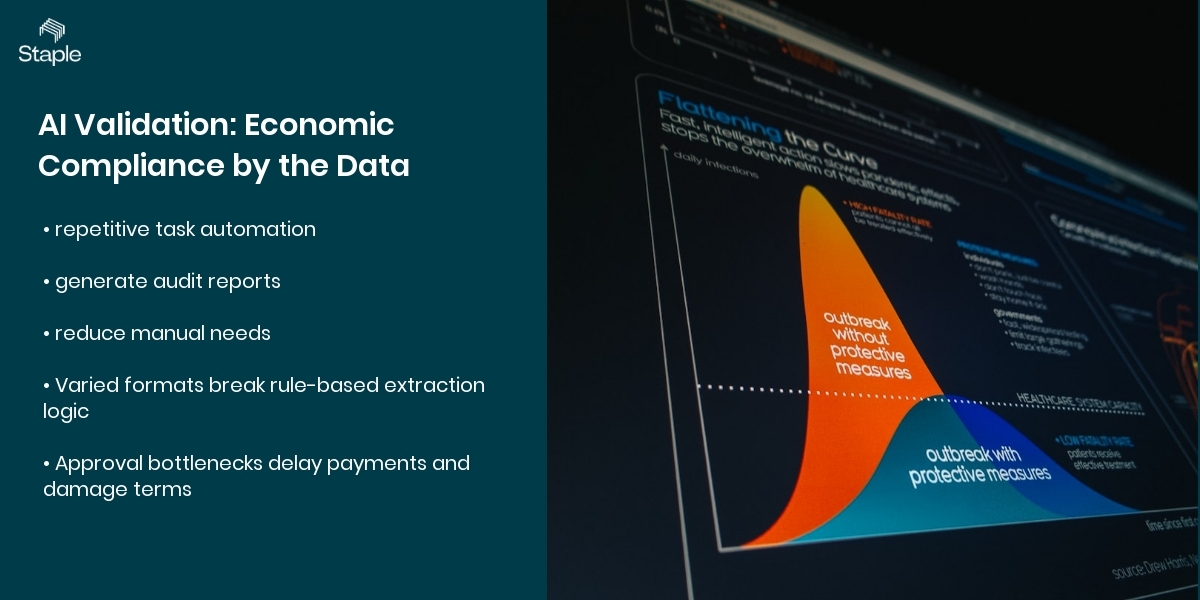
Firstly, according to LexisNexis Risk Solutions, global financial crime compliance costs for financial institutions total more than $206 billion annually. Second, with the Economic Crime Act 2025, businesses face steep fines for non-compliance. Third, Fenergo's KYC Trends research shows 67% of banks have lost clients due to slow or inefficient KYC and compliance processes.
These numbers demonstrate the financial stakes at play. By not utilizing AI for document validation, companies risk falling behind and facing severe penalties. Efficient document verification significantly impacts the overall business risk strategy. AI’s capabilities in reducing those compliance gaps are undeniable, providing organizations with an essential lifeline in regulatory environments.
Document Automation Enhancements: AI’s Role in Compliance
Modern AI tools effectively integrate with existing systems, enhancing document verification processes. This integration mitigates human error and rapidly adapts to evolving compliance requirements. AI and document validation work together to enhance regulatory compliance.
First, AI automates repetitive tasks, reducing the time required for document review. It identifies inconsistencies and flags documents needing further examination. Second, it cross-references document data against pre-set rules and external databases, ensuring alignment with the Economic Crime Act 2025 requirements. Third, it generates reports that are audit-ready, ensuring each document shows a clear compliance path.
• Automates repetitive document checks
• Identifies and flags inconsistencies
• Cross-references data with regulations
• Creates audit-ready reports
• Reduces manual intervention needs
Why Most Document Processing Tools Fail
High on the list of failure points for document processing tools are limited scalability and inflexible frameworks. Enterprises often learn, after significant investment, that their chosen tools cannot adapt quickly to new mandates like the Economic Crime Act 2025. This risk is exacerbated by tools that provide minimal scope in cross-referencing compliance.
Moreover, a substantial gap still exists between the promise and reality of claimed processing speeds and accuracy. Tools lacking robust AI capabilities cannot meet the dynamic needs of economic crime prevention, particularly in document validation, leading to continuing fines and regulatory issues.
Additionally, failure to integrate updated compliance protocols is a common downfall leading to inadequate risk management strategies. To avoid these pitfalls, choosing AI-powered validation tools with proven adaptability and reliability is essential.
How Staple AI Can Help
Staple AI offers a finely-tuned solution for staying ahead of compliance requirements such as the Economic Crime Act 2025. With its three-layer architecture, it ensures that your documents are processed accurately and securely. The Document Layer assesses document authenticity before data extraction. This ensures that only genuine documents enter your system, preventing forgery-related compliance breaches.
The Data Layer excels in cross-verification and contextual extraction, crucial for preventing penalties with document validation. Cross-source reconciliation helps map document data accurately, decreasing misclassification risks. Finally, the Trust Layer provides an immutable audit trail, seamlessly integrating every verification step into a comprehensive compliance report.
Staple AI's solutions are expansive yet light on existing systems, offering a speedy ROI. As a business, you are enabled with the tools to not only mitigate compliance risks but build a strategy poised for long-term success. Discover more on our auto-reconciliation page.
Let us help illuminate your path to full compliance and risk management efficiency. Contact us today for a consultation.
ROI Analysis: What Analyst Research Shows About Economic Crime Act 2025 Compliance
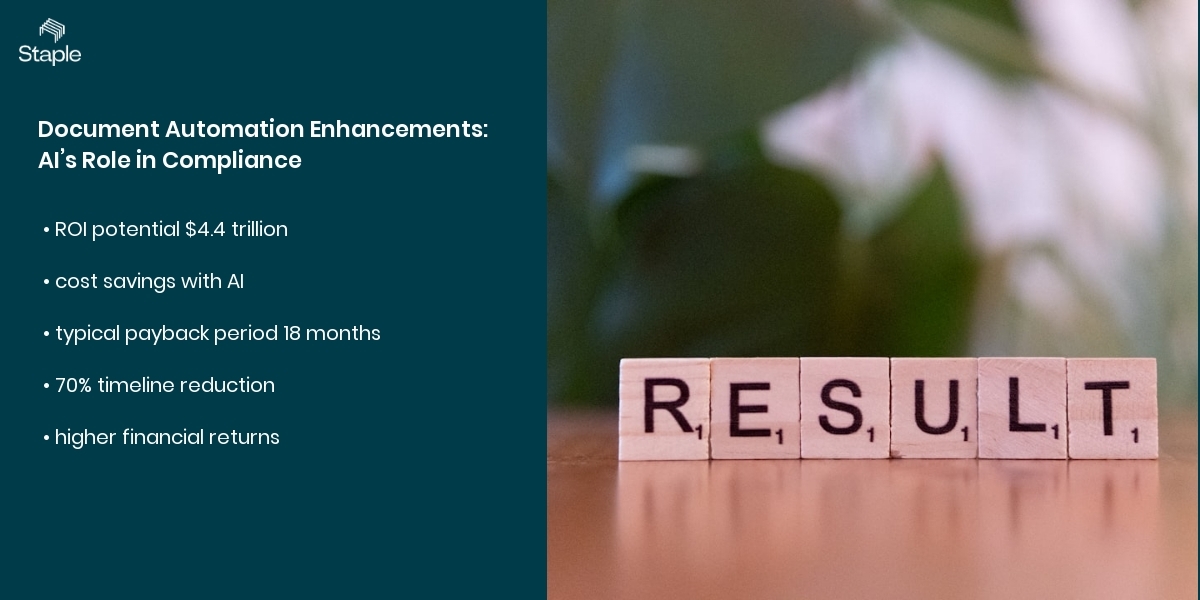
The return on investment for implementing AI-powered document validation tools is significantly persuasive. According to McKinsey, gen AI could add up to $4.4 trillion globally across multiple industries. This economic potential is particularly relevant when considering the costs associated with compliance failures, which AI validation tools effectively mitigate.
In practical terms, AI reduces direct costs associated with manual compliance processes, such as labor and error rectification. The payback period for AI compliance solutions can be relatively short, as enterprises see early gains in accuracy and time savings once the tooling is properly embedded.
Streamlined processes improve overall operational efficiency by significantly reducing document processing timelines. Enterprises investing in AI validation tools for preventing economic crime penalties see financial returns compound over a sustained period.
FAQs
How do AI validation tools support Economic Crime Act 2025 compliance?
AI validation tools assist in regulation compliance by providing precise document verification processes that minimize errors and improve accuracy. These tools enhance the manual review process by automating the verification of key document details against updated economic crime laws. Efficient document verification becomes a strategic asset, preventing regulatory penalties and fostering a robust compliance strategy. AI tools adapt quickly to new rules and regulations, ensuring every document meets the Act's stringent requirements.
What are the benefits of AI-powered document verification for economic crime prevention?
AI-powered document verification primarily reduces human error, ensuring that each document is accurately assessed against compliance criteria. This automation significantly mitigates risk while offering substantial cost savings by reducing the time and labor associated with manual validation. Furthermore, AI validation facilitates faster settlement times and enhances the reliability of transaction data, crucial for economic crime prevention. Enterprises benefit from streamlined processes that maintain their integrity in financial reporting.
How can AI help prevent penalties under the Economic Crime Act 2025?
AI helps prevent penalties by automating the document validation process, ensuring adherence to compliance requirements, and swiftly identifying anomalies that indicate potential regulatory violations. By deploying AI-powered tools, businesses can create an audit-ready trail that fully accounts for each transaction's validity, effectively avoiding fines. This precision minimizes the regulatory burden and curtails the risk of non-compliance.
How do you measure success? What KPIs should we track?
Success in AI-powered validation for compliance can be measured by tracking several key performance indicators: accuracy rate, targeting high levels of precision consistent with your regulatory obligations; processing speed, aiming for near-real-time document validation with minimal manual intervention; compliance error rate, targeting as close to zero as operationally achievable; and cost savings from automation efforts, measured as a reduction in manual validation labor over time. These indicators give a transparent view of how your compliance strategy is performing.
What role does document verification play in risk management for new economic crime laws?
Document verification serves a crucial role in risk management by identifying and flagging discrepancies before they manifest into compliance issues. With the Economic Crime Act 2025, document verification ensures all transactions and documents are vetted thoroughly, reducing the chance of penalties significantly. Automated validation aids in maintaining a company's regulatory standing, ultimately protecting against fraudulent activities that could compromise their operations. This rigorous approach supports a stable regulatory environment and minimizes exposure to financial and reputational risks.
Incorporating AI-powered document validation is not just a technological advance; it is a strategic necessity. Staying compliant with the Economic Crime Act 2025 requires more than routine checks; it demands a robust system capable of adapting to extensive and complex regulations. In this evolving landscape, economic crime regulation mandates stringent measures, measures best met with intelligent validation tools designed for precision and efficiency.

.png)