
How to Run an Internal AI Audit, Before Regulators Do
Quick answer
Conducting an internal AI audit involves systematically reviewing your AI systems to ensure compliance with regulatory standards. By proactively implementing a thorough AI audit checklist, enterprises can identify potential compliance issues and optimize AI performance. Regular pre-regulatory AI reviews are essential to maintain AI governance and minimize risks.
How to Run an Internal AI Audit Before Regulators Do
As enterprises increasingly integrate AI technologies, many leaders find themselves facing regulatory audits they are not prepared for. I've seen numerous businesses scramble at the last minute, hastily assembling a team to conduct an "internal AI audit." They desperately try to catch up on compliance requirements, hoping to outpace impending regulations. This reactive approach often leads to inadequate reviews, increased risks, and potential financial penalties.
The importance of a comprehensive AI audit checklist cannot be overstated. It's not just about checking boxes. It's about understanding, reviewing, and optimizing their AI systems. Implementing an internal AI audit before regulators knock on your door is crucial. Otherwise, you're left in a defensive posture, managing risks instead of strategically eliminating them.
This pre-regulatory AI review should be a standard practice, not a one-time reaction. Consider it a regular AI system inspection. By routinely evaluating your AI implementations, you can ensure they meet industry standards, maintain data integrity, and uphold the enterprise's overall compliance. In doing so, you strengthen your governance and make strides in AI governance planning. The investment in this process today could save you substantial pain and cost tomorrow.
Essential Preparations for an Enterprise AI Audit Process
Before diving into the enterprise AI audit process, certain prerequisites must be in place. First, define the scope of the audit. This involves identifying areas where AI technologies are implemented across the enterprise. From data processing to personalized customer experiences, knowing where to focus is essential. Second, establish a dedicated team. A knowledgeable group equipped with domain expertise and a clear understanding of your AI systems is indispensable.
Third, gather all necessary documentation. This includes AI models' source code, data sources used for training, algorithms, and decision-making protocols. Regulatory scrutiny often focuses on transparency; having these documents ready will streamline the audit. Additionally, ensure that there is clear documentation on data privacy measures taken to protect sensitive information.
Finally, set clear objectives for the audit. This means understanding what success looks like for the organization. Define key performance indicators (KPIs) to measure compliance effectiveness, such as risk reduction percentages, incident reporting frequency, and improvements in data accuracy. Clarity on these goals will guide the audit process and help measure its impact on overall AI governance planning.
Step 1: Define the Governance Framework
Start by establishing an AI governance framework. This framework should provide a structured approach to managing AI applications across your enterprise. In my experience, a comprehensive framework includes policies, standards, and controls designed to address ethical, legal, and operational risks.
The framework must address data quality, model validation, human oversight, security protocols, and ethical considerations. Each aspect ensures AI applications align with corporate values and regulatory requirements. Furthermore, by setting a strong framework, enterprises can proactively prevent any misalignment between AI operations and business objectives.
A thorough governance framework will also incorporate feedback from diverse departments, promoting cross-functional collaboration. This inclusivity ensures the framework addresses not only technical concerns but also ethical and societal impacts. Establishing this framework early on in the AI audit checklist facilitates smoother compliance with upcoming regulatory demands.
Step 2: Evaluate AI System Performance
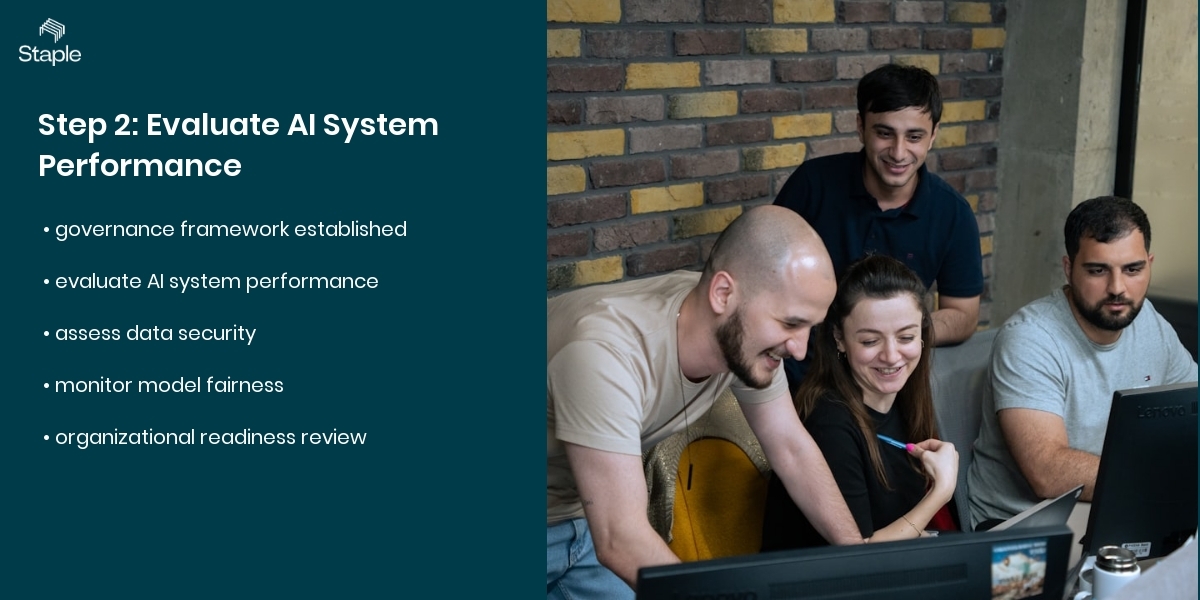
The next step is to conduct a detailed AI system inspection. Begin by examining the overall performance of your AI systems. Assess their accuracy, speed, and efficiency to ensure they meet your predefined standards. Performance evaluation should include testing AI models in real-world scenarios and simulations.
This evaluation must scrutinize the quality and reliability of data used by AI models. Data anomalies or biases can lead to model inaccuracies, so deploying regular checks is non-negotiable. Successful system inspection reveals areas where performance lags, guiding IT teams toward necessary improvements.
Equally important is reviewing the model lifecycle management. This includes documentation of all updates, retraining, and decommissioning processes. By maintaining accurate records, performance transparency is ensured. It also aids in replicating past results should the need for compliance review arise.
Step 3: Assess Data Security and Privacy

As AI systems process massive amounts of data, securing this data should be a priority. Assess your data security protocols to ensure they meet industry standards. Implement strong encryption, access controls, and incident response strategies as part of your AI audit checklist.
Pre-regulatory AI reviews must evaluate compliance with data privacy laws like GDPR or CCPA. Address both planned and unforeseen scenarios where data breaches could occur. This step involves analyzing how data is collected, stored, accessed, and shared across AI systems. Implement solutions that anonymize sensitive data to align with international standards.
Moreover, conducting regular penetration tests is vital. Such tests help detect vulnerabilities in AI infrastructure before they become exploitable by cyber threats. By adopting a proactive approach in securing your data during an internal AI audit, you safeguard your organization from reputational damage and financial penalties.
Step 4: Monitor Model Fairness and Bias
To maintain ethical AI systems, monitor fairness and bias within your models. AI bias occurs when models unintentionally produce skewed results due to unrepresentative training datasets or flawed algorithms. Regularly evaluate your models for fairness through precision tests and comparative analysis.
Identify potential sources of bias by reviewing data input methods and model training strategies. Engage diverse stakeholder groups to assess fairness. Their insights help recognize bias that may be overlooked due to internal blind spots.
Document all findings and actions taken to mitigate bias. This documentation should become an integral part of the enterprise AI audit process, demonstrating your commitment to ethical AI practices. An unbiased AI application not only boosts compliance but strengthens customer trust and brand reputation.
Step 5: Review Organizational Readiness
Assess the readiness of your organization to adapt and manage AI systems effectively. This step determines how well your personnel are equipped with the skills and knowledge required to handle increasing AI complexities.
Training programs should be instituted to raise awareness about AI governance planning among team members. Focus on roles that directly interact with AI systems, such as data scientists, compliance officers, and IT support staff.
Ensure management and executives understand the strategic role of AI audits. Their comprehension of audit outcomes can foster a culture of continuous improvement. This organizational readiness aligns with long-term business goals and optimizes resource allocation.
Step 6: Conduct Regular Compliance Audits
Conducting continuous internal AI audits, rather than sporadic checks, fortifies your defense against regulatory breaches. Regular audits integrate into the fabric of your enterprise operations, leading to ongoing compliance improvement.
Define a schedule outlining audit frequency and extent, ensuring it aligns with business rhythms. Increased audit frequency allows for real-time error detection. Feedback from these audits provides actionable insights to fine-tune your AI systems.
Utilize AI-driven tools and platforms, such as Staple AI, to automate audit processes, putting less strain on your internal resources. These tools streamline documentation, comparisons, and analyses, achieving precision and efficiency in compliance audits.
Reasons Behind First-Year Audit Failures
Though audit processes are designed to ensure compliance, several projects stumble in execution. These failures often stem from poorly defined goals, lack of expertise, and inadequate preparation. Misallocated resources contribute to disruptions in audit fidelity. Overconfidence in AI systems can lead to gaps in checks that compromise their reliability.
Moreover, the initial excitement of AI auditing can fizzle without executive support or a robust governance framework. This oversight results in superficial evaluations that don't critically examine the root causes of discrepancies.
To combat these issues, align management buy-in from the start. Audits should not be seen as a one-and-done venture, but a continual enhancement process that evolves alongside AI advancements. Establishing a feedback loop where audit insights translate into actionable changes prevents common shortfalls.
Document Automation with Staple AI: An Effective Solution
Modern automation tools, like those from Staple AI, address many challenges inherent in AI audits by centralizing and streamlining processes. Automated solutions provide audit-ready documentation and detect data discrepancies promptly, reducing human error and increasing audit precision.
Products such as Intelligent Tables use advanced analytics to automate data extraction, classification, and verification. These tasks, traditionally performed manually, now benefit from greater accuracy at a lower cost.
Moreover, modern document automation solutions facilitate data reconciliation between multiple sources. Ensuring data integrity, they mitigate risks across the document lifecycle. By automating routine audit tasks, your teams can focus on higher-level strategies, optimizing resources and improving compliance outcomes.
Data Insights: The Impact and Benefits of AI Audits
There are tangible benefits to implementing a comprehensive internal AI audit strategy. According to McKinsey Economic Potential of Generative AI 2023, adopting AI and automation technologies could automate up to 70% of workflow hours. In financial services alone, productivity gains could reach 4.7% annually.
Moreover, Gartner reports that 58% of finance functions utilized AI in 2024, demonstrating accelerated adoption of AI-enabled solutions. These statistics underscore the necessity for robust governance frameworks and frequent inspections.
Effective implementation of audit processes correlates with reduced regulatory penalties and an increased rate of AI innovation adoption. Enterprises investing in such practices can quickly adapt to emerging AI trends, staying ahead in a competitive market.
Frequently Asked Questions
What is an internal AI audit?
An internal AI audit is a comprehensive analysis of your enterprise's AI systems to ensure they comply with internal policies and external regulations. It involves evaluating processes, data privacy measures, and system outputs to identify and rectify any governance or performance gaps. This practice helps prevent potential legal repercussions by proactively addressing compliance risks.
How often should we conduct AI audits?
Enterprises should conduct AI audits regularly, with frequency tailored to industry dynamics. A quarterly review is typically advisable, ensuring systems stay compliant with evolving regulations. The cadence should be flexible enough to accommodate rapid changes in AI trends or specific audit findings that necessitate more frequent evaluations.
What is an AI audit checklist?
An AI audit checklist is a structured framework outlining tasks and areas of focus for evaluating AI systems. It typically includes assessments of data security, model performance, bias, and ethical considerations. This checklist ensures a systematic approach to auditing, highlighting key elements required to mitigate risks and achieve compliance.
How do you measure success? What KPIs should we track?
Success in AI audits can be measured through KPIs such as the reduction in compliance incidents, improvement in model accuracy, increased efficiency of data processing, and responsiveness to regulatory changes. For example, aim for less than a 1% compliance incident rate, a model accuracy exceeding 90%, and a processing time improvement beyond 30%. Such metrics help evaluate audit effectiveness and demonstrate ROI.
Why is pre-regulatory AI review critical?
Pre-regulatory AI reviews allow enterprises to identify and address potential compliance issues before facing regulatory scrutiny. By staying ahead of enforced regulations, organizations safeguard against reputational damage and financial penalties. Additionally, it enables them to optimize operations and enhance trust, positioning them for sustained success amidst the rapidly evolving AI landscape.
How Staple AI Can Help
Staple AI specializes in intelligent document processing, helping enterprises optimize governance and compliance through an automated approach. Our solutions provide tools for enhanced document processing capabilities, facilitating faster, more reliable audits. By employing context-based extraction and reconciliation, Staple AI ensures data accuracy and integrity across workflows.
Our accounts payable automation integrates seamlessly with existing enterprise systems, streamlining compliance checks and reducing manual intervention. This leads to significant resource savings and minimizes the risk of human error in audit tasks.
With our no-code platform, enterprises can effortlessly implement tailored audit measures, responding dynamically to regulatory shifts. By utilizing our products, you ensure a robust, audit-ready operational environment that supports your strategic AI governance and regulatory adherence.
Concluding your readiness for an AI audit begins here. Implement these steps to establish a strong foundation for regulatory compliance and stay ahead of evolving governance standards.
By the numbers, this blog is set to fortify your AI audit strategy, ensuring readiness before regulatory bodies signal their intent to review. Covering all the vital considerations, this guide offers the insights necessary to manage risks, optimize operational efficiency, and confidently navigate your enterprise's AI evolution.

.png)