
Make data trustworthy before your systems act on it.
Staple ingests documents and data from any source, structured or unstructured, in any format or language. It checks the source, extracts and verifies the content, and makes it audit-ready before it enters your systems. That is the first mile of data processing.
Where enterprises put Staple to work
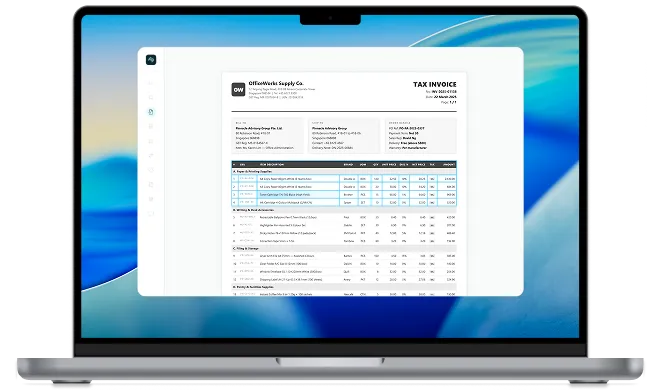
Invoice processing
Multiple entities, languages, document types, and high volume. Invoices are extracted, verified, and delivered to your AP systems with
audit-ready data.
Streamlining operations across the globe
Replace scattered country-specific tools with a single data processing platform spanning regions, languages, and document types.


E-invoice compliance
One platform for every country. Connect to tax authorities worldwide, handle AP and AR in the same flow, and stay ahead of mandates without a new IT project every time regulations change.


Data extraction
When extraction strength is the deciding factor. Complex tables, messy layouts, dot-matrix scans, 300+ languages, accuracy that holds at volume.

We check the document,
verify the data and prove the output
Document:
Has the document been tampered with?
Before a single field is extracted, Staple checks the container itself. File metadata, pixel-level anomalies, and document forensics catch edits the eye cannot see. Every document gets a tamper confidence score and a supporting evidence trail.
Data:
Is the data accurate, verified, and consistent?
Staple processes structured and unstructured inputs at scale across 300+ languages, then verifies the data. AI contextual verification, external validation with tax authorities, internal business rules and anomaly checks, and reconciliation across up to 10 sources, all before data reaches your systems.
Trust:
Can every result withstand an audit?
Every field carries its full processing history: what was extracted, how, by whom, and under which rules. Results are cryptographically sealed. Any unauthorized change is immediately visible. This is what makes it audit-ready data.
Most document processing stops at extraction. But that's where the risk starts.
Documents arrive in different formats: PDFs, scans, spreadsheets and photos. Your team processes them, pushes data downstream, and chases errors by hand.
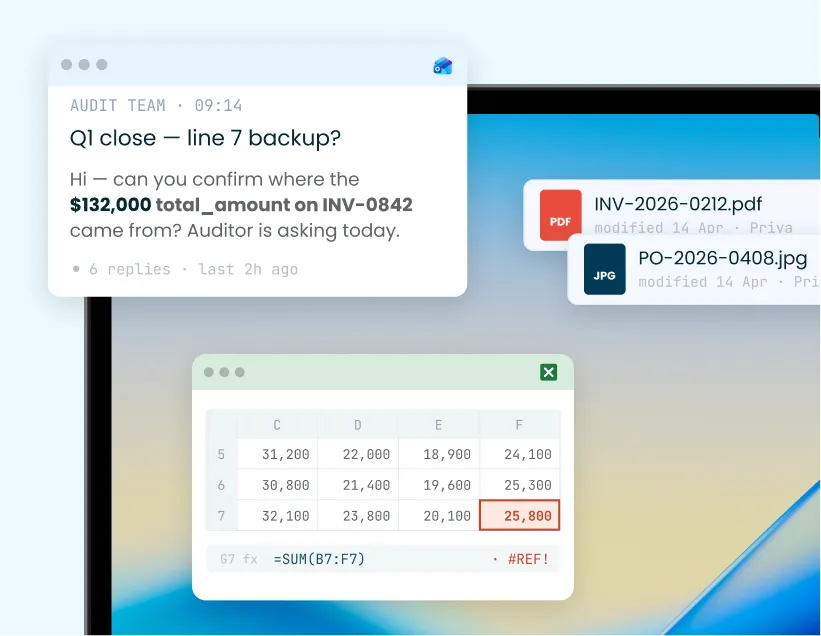
Then an auditor asks where a number came from. A file has been tampered with. A figure doesn't add up. And nobody can trace the source. Because extracted data is not the same as verified data.
The first mile is where data risk starts. Staple stops it at the source.
What our customers say

“Staple AI became another team member for us. The tool processes high invoice volumes with minimal effort, pushes data into our warehouse management system automatically, and significantly reduces errors. It has truly transformed how we handle invoice processing."

"Our company is using another OCR tool that struggles to recognise dot-matrix documents, however, it worked perfectly with Staple at almost 100% accuracy."

“Feedback from the various teams is tremendous and encouraging. We have already implemented Staple AI for a global telecom giant client.”

“There is a lot of excitement around Staple internally! There are so many potential applications for Staple to deliver automation to the broader group.”

"We can find extraction tools from a number of vendors today, but what Staple provides is so much more. You have explainability, audit trails, and liability protection from regulators, to whom we need to demonstrate ongoing compliance year in and year out. This is the elevated protection that Staple provides."
Results from enterprises like yours
Trust that holds under regulatory scrutiny
Global Insurance
A global insurance provider managing £108.9B across 500,000+ customers needed sensitive data redacted and defensible under audit. Staple handled it at scale, across formats and languages, with no templates.
Global consolidation: millions of documents across regions on one processing layer
- Flexibility: template-free across formats, layouts, and languages
- Extensibility: ingests via S3 and SFTP, syncs securely across environments
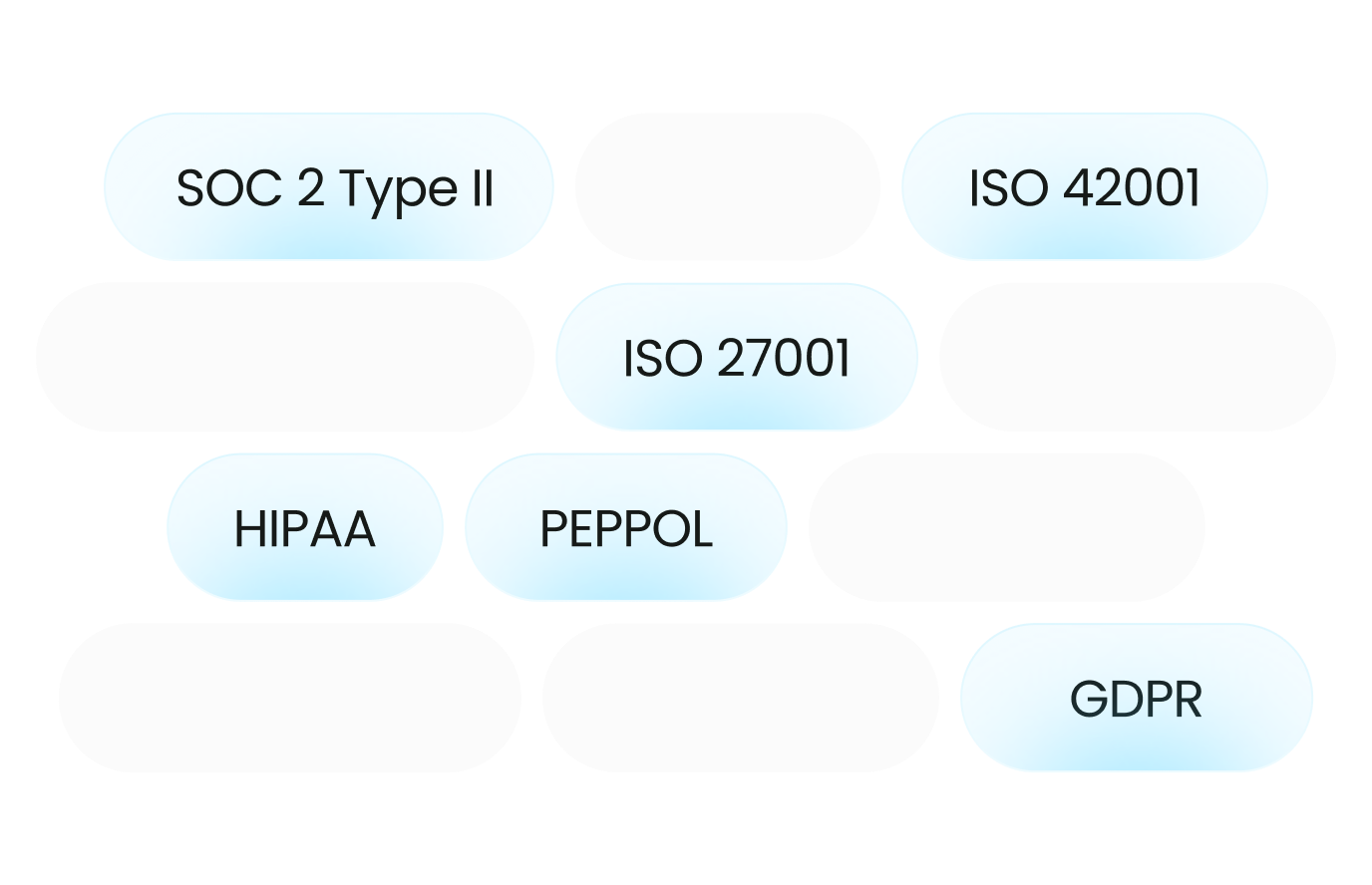
- Robustness: 98.95% redaction accuracy under full AML and PCI DSS auditability

Global consolidation without the maintenance
Global Investment Bank
A global investment bank ran document processing across 5+ countries, with teams drowning in non-standardized formats, layouts, and languages. Staple consolidated it onto one platform, no templates to maintain, no rules to rewrite as complexity grew.
Global consolidation: one platform across 5+ countries and every document type
- Flexibility: 800+ templates eliminated, handles any format with no configuration
- Extensibility: integrated through API and SSO into existing enterprise workflows
- Robustness: real-time reconciliation of values, quantities, and line items at 3 to 6 seconds per document

See Staple process your documents
Book a 30-minute demo with a document processing specialist.
Not ready yet?
Take your time to decide.