
Logistics, Supply Chain & F&B
Process every document in your supply chain
Handwritten delivery notes, scanned invoices and photographed purchase orders. Any format, any language, Staple extracts, matches, and pushes reconciled data into your ERP. Your supply chain systems stay as they are.
The problem your team is managing manually
Every supplier sends documents in their own format, layout, and language. A handwritten delivery note arrives alongside a scanned invoice and a photographed purchase order. Your team matches all three to close the transaction.
Right now, that matching happens in a spreadsheet. Someone checks the delivery note, someone else reconciles the invoice, a third person chases the PO.
E-invoicing regulations add yet another layer of complexity. But your ERP doesn’t connect to any of them. Structured e-invoices and paper documents go through different tools and teams.
Every new supplier market creates a new version of this problem.
How Staple works for supply chain and F&B operations
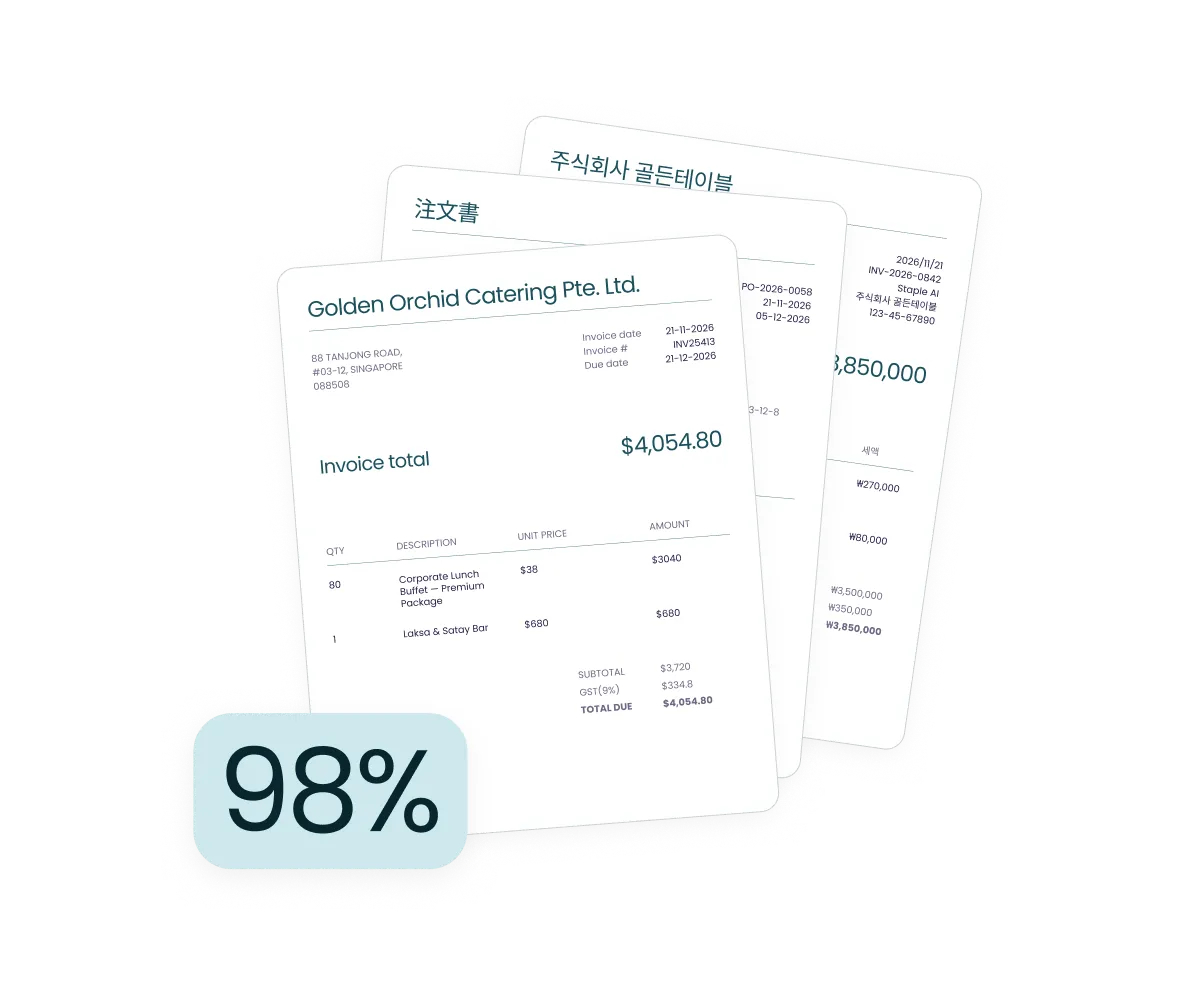
98% straight-through processing
98 of every 100 documents are processed, matched and pushed into your ERP without human intervention. The other two are flagged for review with discrepancies highlighted. Your volume doubles and processing capacity scales without additional hires.
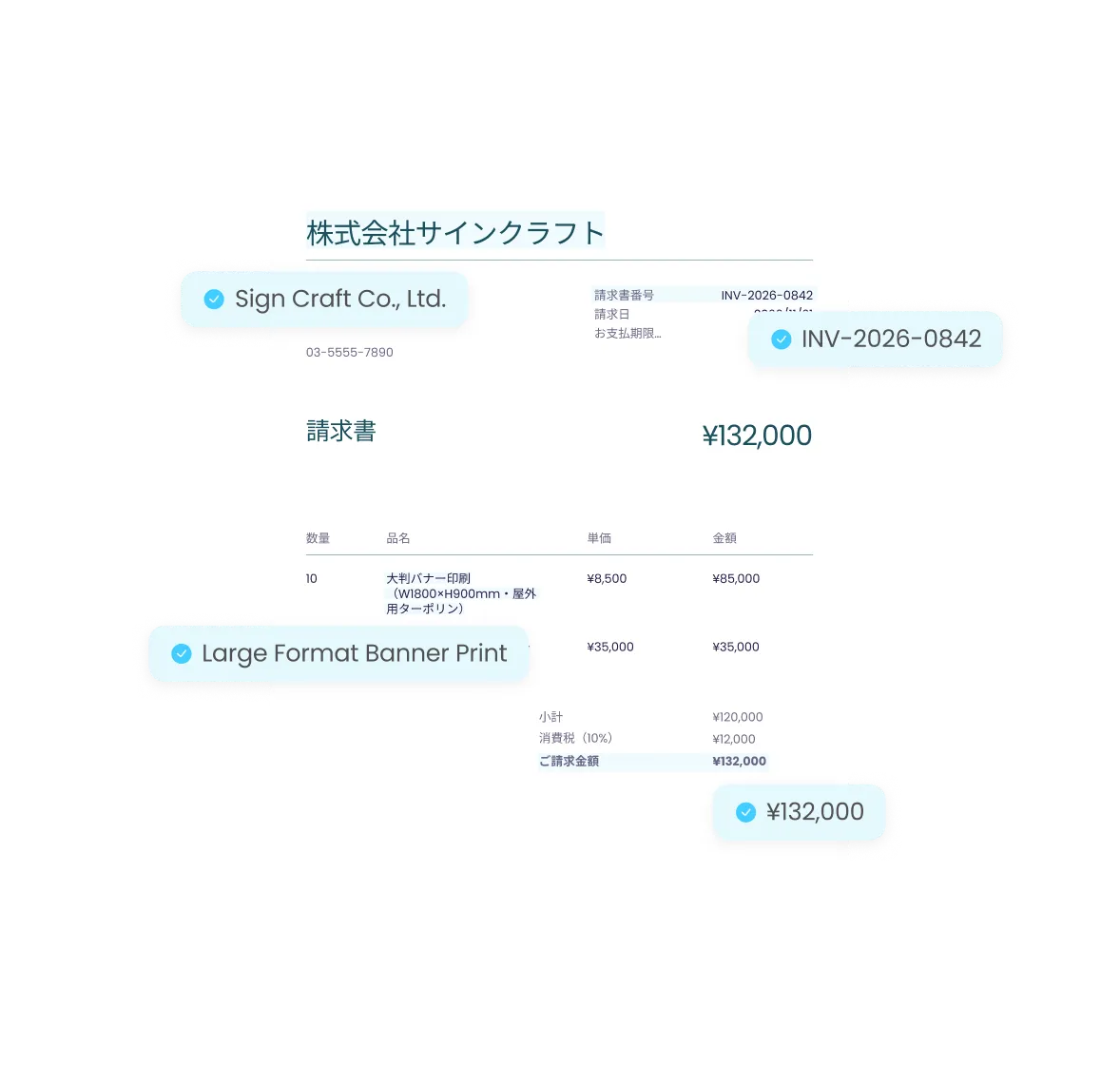
Template-free data processing
Onboard a new supplier with no configuration. Staple classifies and extracts new document types, formats, and layouts automatically.
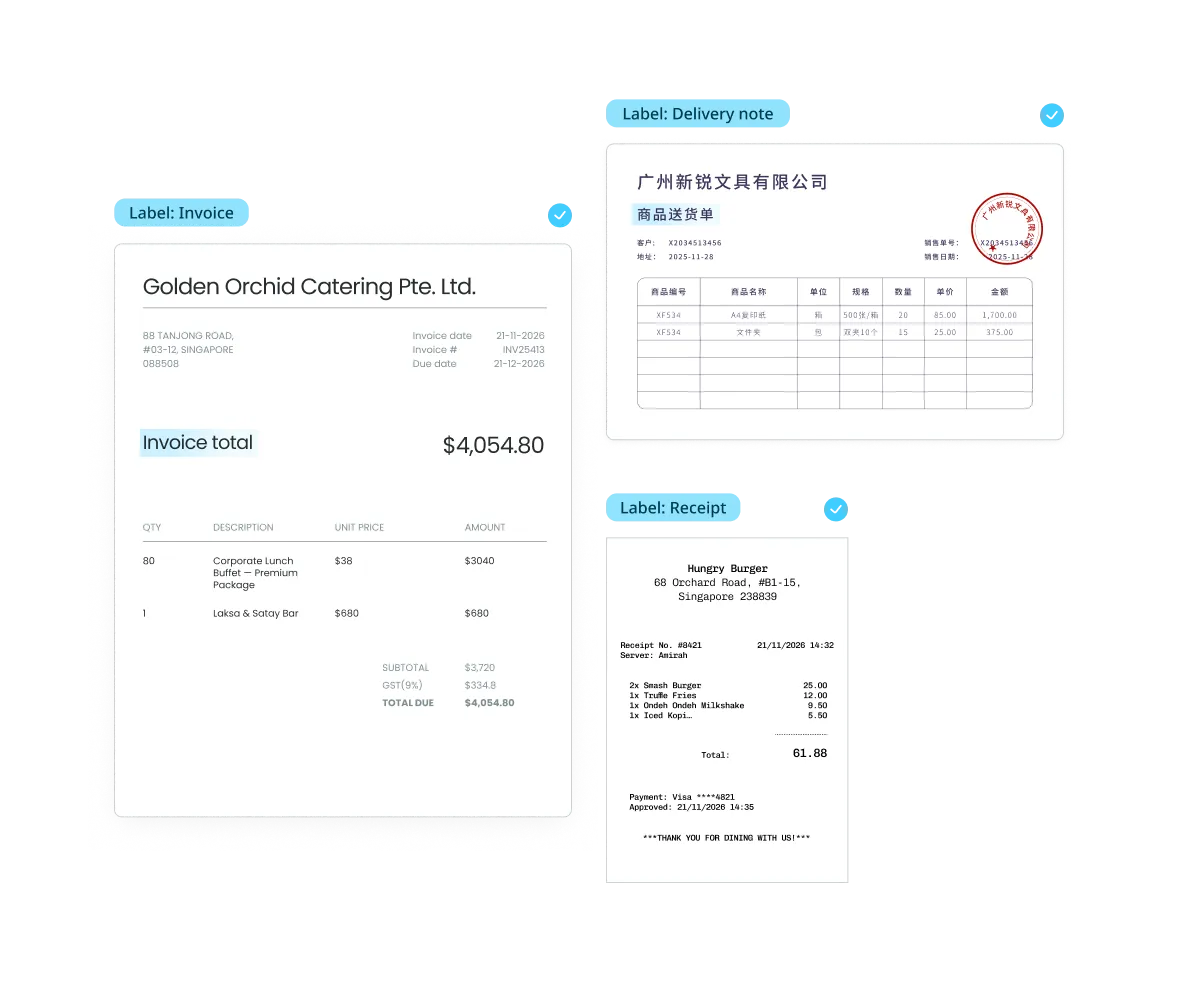
Auto-classify all documents
Drop in a mixed batch and Staple sorts document types without manual pre-labelling.
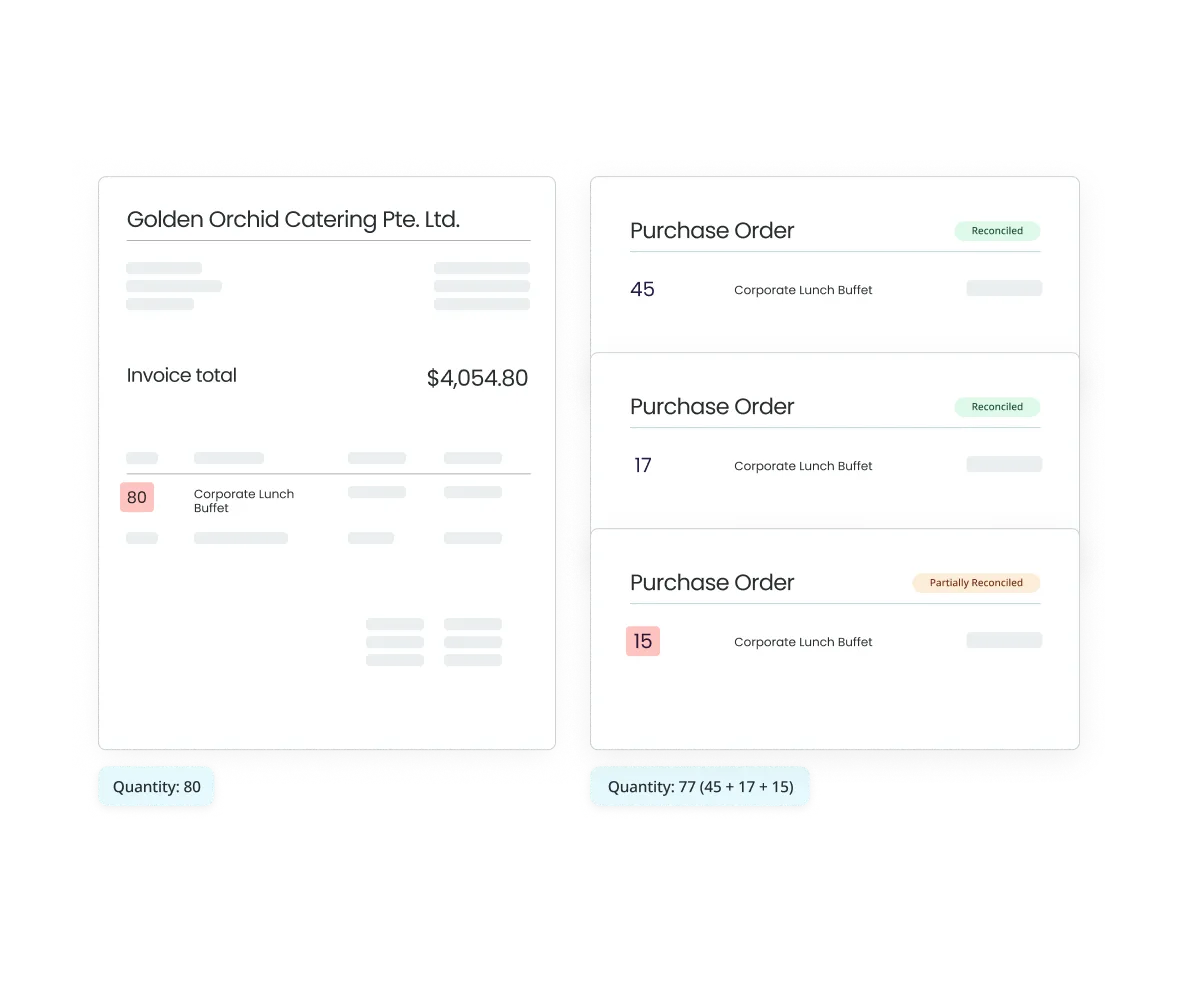
Data Reconciliation on one screen
Bills of lading, delivery notes, invoices, purchase orders, receipts, and trade certificates, all handled in one flow. Line items, quantities, and prices cross-referenced, with shortfalls, substitutions, and discrepancies flagged automatically so your team only reviews the exceptions, not every document. Staple matches the documents, your ERP closes the transaction.
E-invoice compliance built in
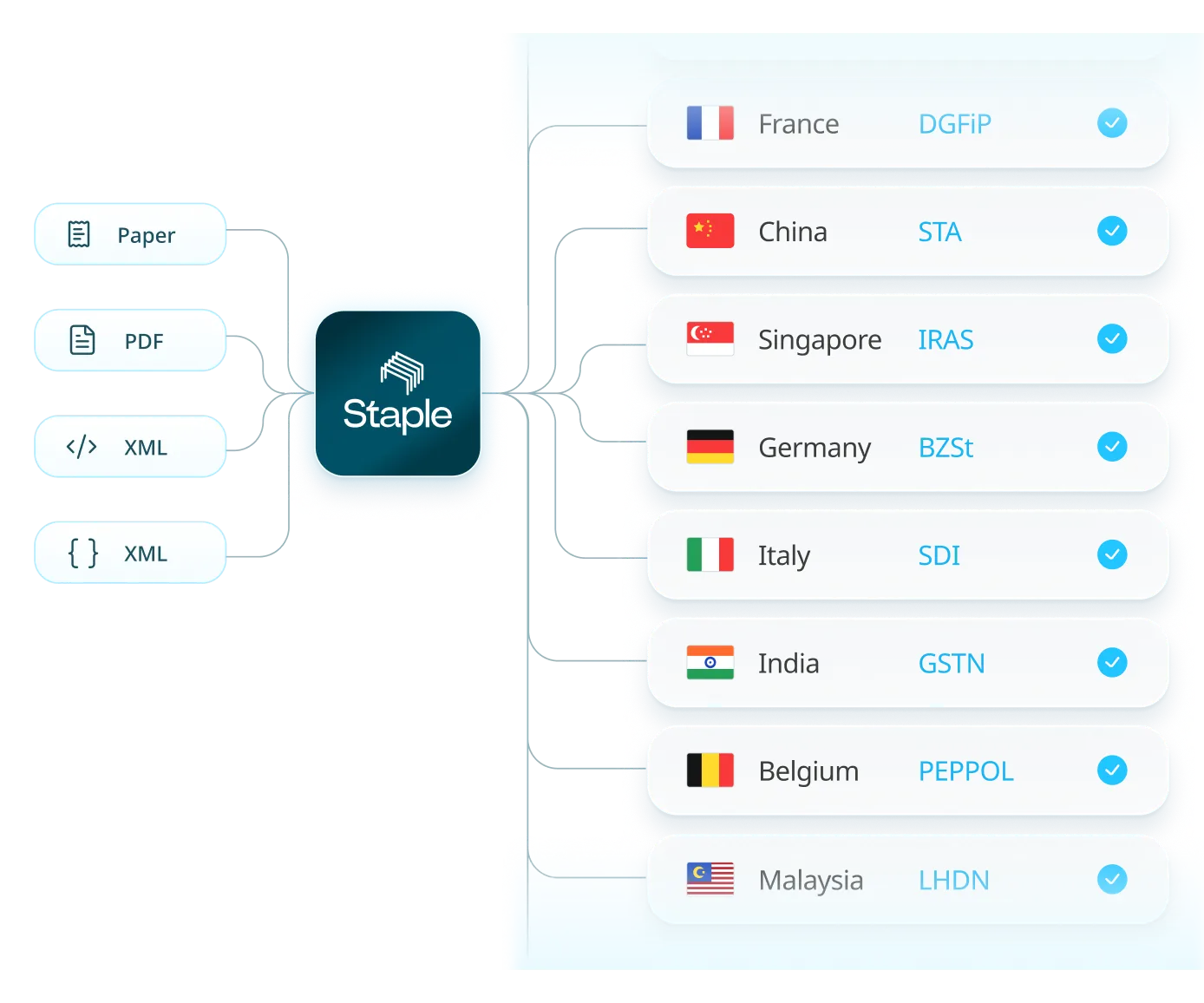
From Peppol in Europe, to InvoiceNow in Singapore and CFDI in Mexico, Staple connects to tax authorities worldwide. Supplier e-invoices are validated against the tax authority, matched with your POs and delivery notes, and archived with country-specific retention. There’s no separate process for each jurisdiction.
Native multilingual processing
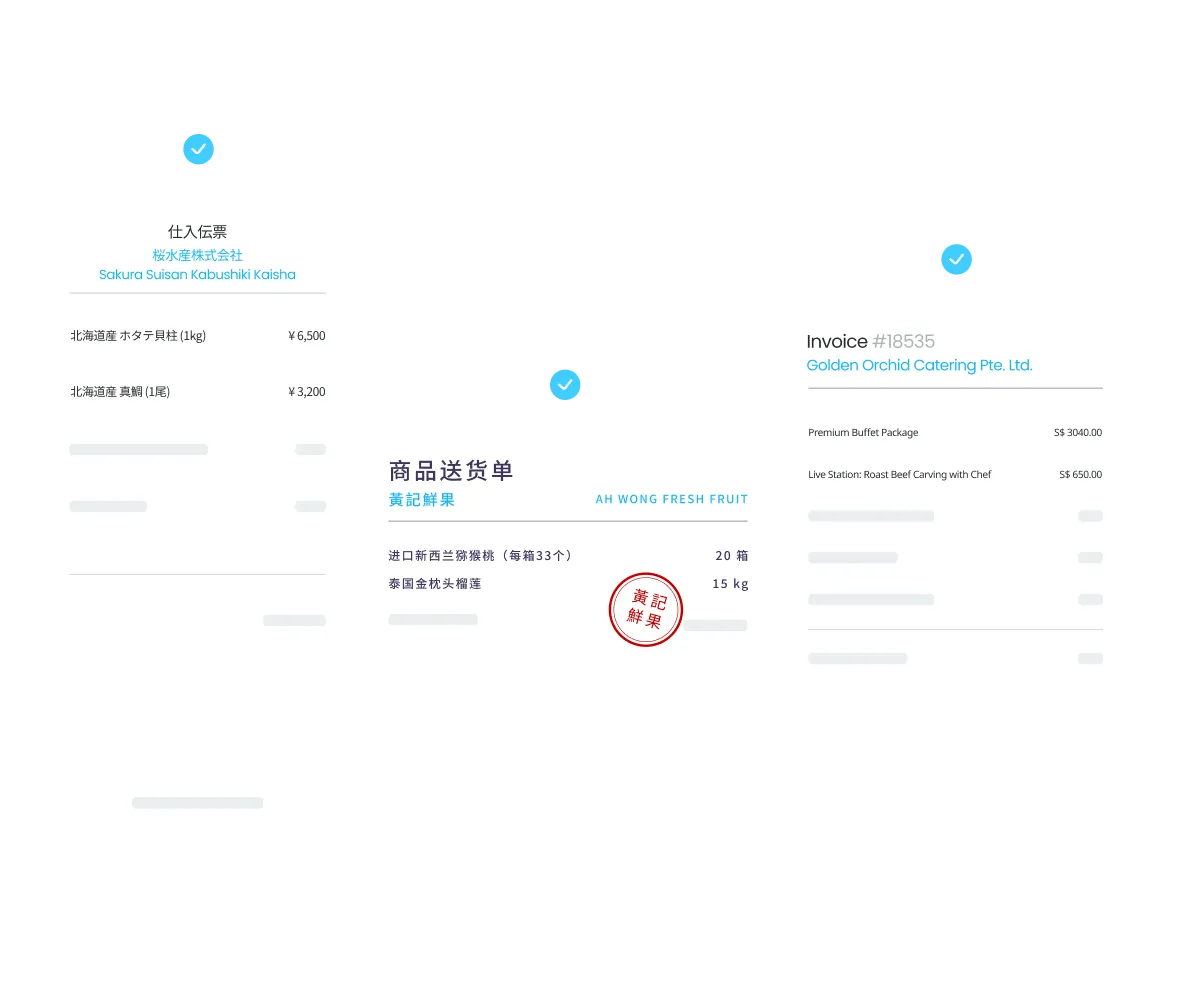
Staple uses native language models in Bahasa, Chinese, Korean, Thai and Vietnamese. Handwriting, rubber stamps, and mixed-language documents are processed directly. Add a supplier from a new market and we process their documents from day one with no IT involvement.





See Staple process your supply chain documents
Bring your delivery notes, invoices, or POs in any language. We will show extraction accuracy on your actual supplier files.
Real results, real operation
How foodpanda eliminated manual processing across APAC
Common questions
What supply chain documents can Staple process?
Bills of lading, delivery notes, invoices, purchase orders, receipts, and trade certificates, from handwritten, scanned, photographed, and digital sources, across 300+ languages.
How does Staple handle documents from suppliers in different countries and languages?
Native language models process Bahasa, Chinese, Korean, Thai, and Vietnamese, including handwriting, rubber stamps, and mixed-language documents, with no templates. A supplier from a new market is processed from day one with no IT involvement.
Does Staple replace our ERP or supply chain systems?
No. Staple sits in front of them, extracting, matching, and reconciling documents, then pushing verified data into your existing ERP and systems, which continue to run the transaction.
How does Staple catch discrepancies before they reach our systems?
Staple cross-references line items, quantities, and prices across POs, delivery notes, and invoices, flagging shortfalls, substitutions, and mismatches before warehouse, ERP, or trade processes act on them.
How much can be processed without manual review?
Around 98 of every 100 documents are processed, matched, and pushed into the ERP without human intervention. The rest are flagged for review with discrepancies highlighted, so capacity scales without added hires.