
External Validation & E-Invoicing
Validate what a document claims against external sources
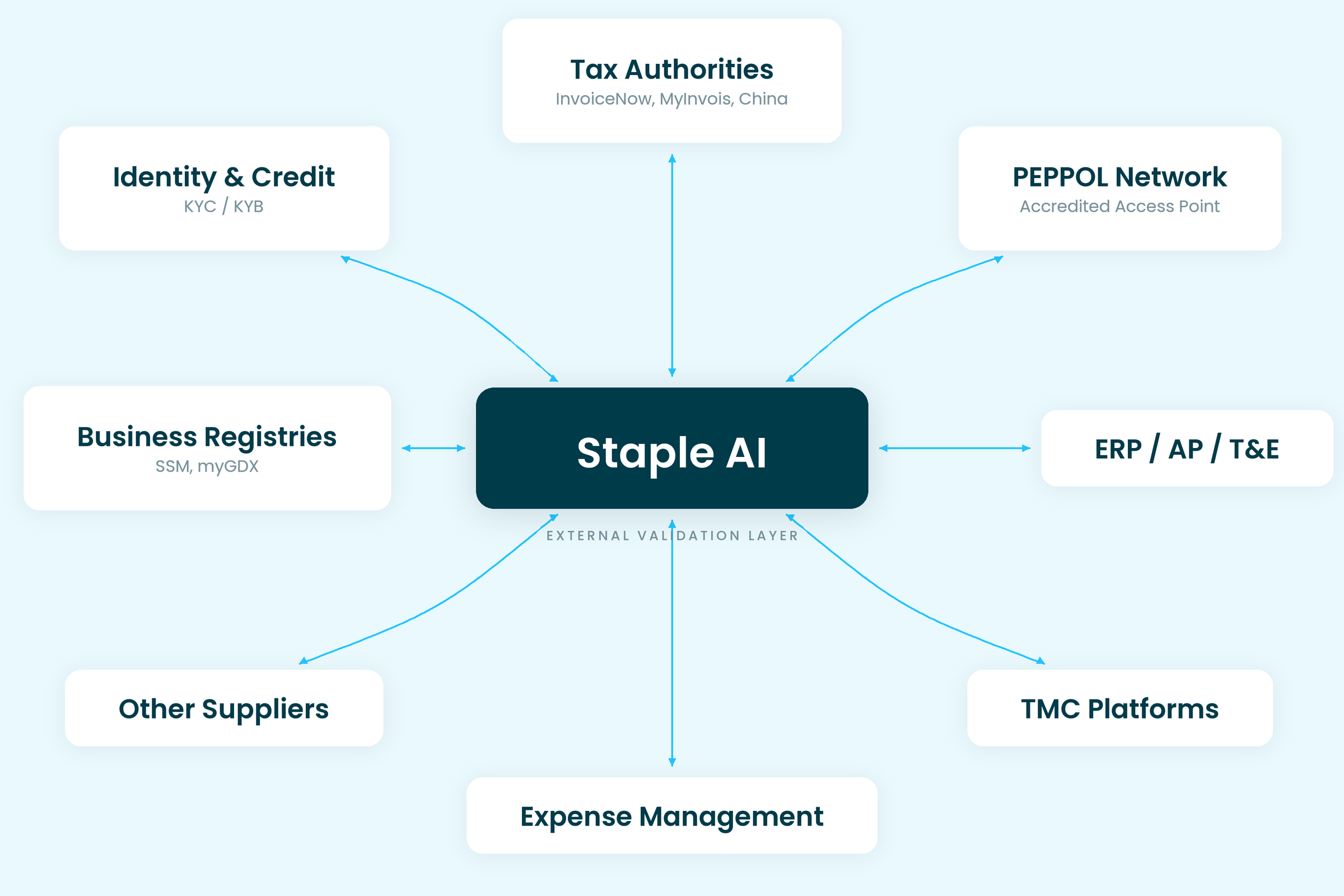
A document can be extracted perfectly and still be false. Staple checks its claims against tax authorities, business registries, and e-invoicing networks, through one extensible layer, so a supplier, a tax number, or an invoice is confirmed as real before your systems act on it.
Extraction confirms what the document says.
It can't confirm whether it's true.
A tax ID can be well-formed and still not exist. An invoice can look perfect and already have been submitted last week.
A supplier can be named clearly and not be a registered entity.
Verifying any of this today means logging into separate government portals and registry tools, one per country, each maintained separately, and most teams simply skip it until something goes wrong.
How Staple Validates Against External Sources
External-Source Model
One layer for tax authorities, registries, identity, and credit.
Staple validates against external authorities through a single model: tax authorities, business registries, and identity and credit services.
Instead of a different tool per country and per source, the checks run in one place, as part of processing, not as a manual step bolted on afterwards.
API and Webhook Pattern for Custom Sources
Add your own validation sources without a rebuild.
When you need to check against a source Staple doesn't cover out of the box, an API and webhook pattern lets you add it.
Customer-specific validation services connect into the same layer, so extending coverage doesn't mean maintaining a separate integration.
E-Invoice Authentication, Duplicate Checks, and Archival
Full e-invoice handling, not just receipt.
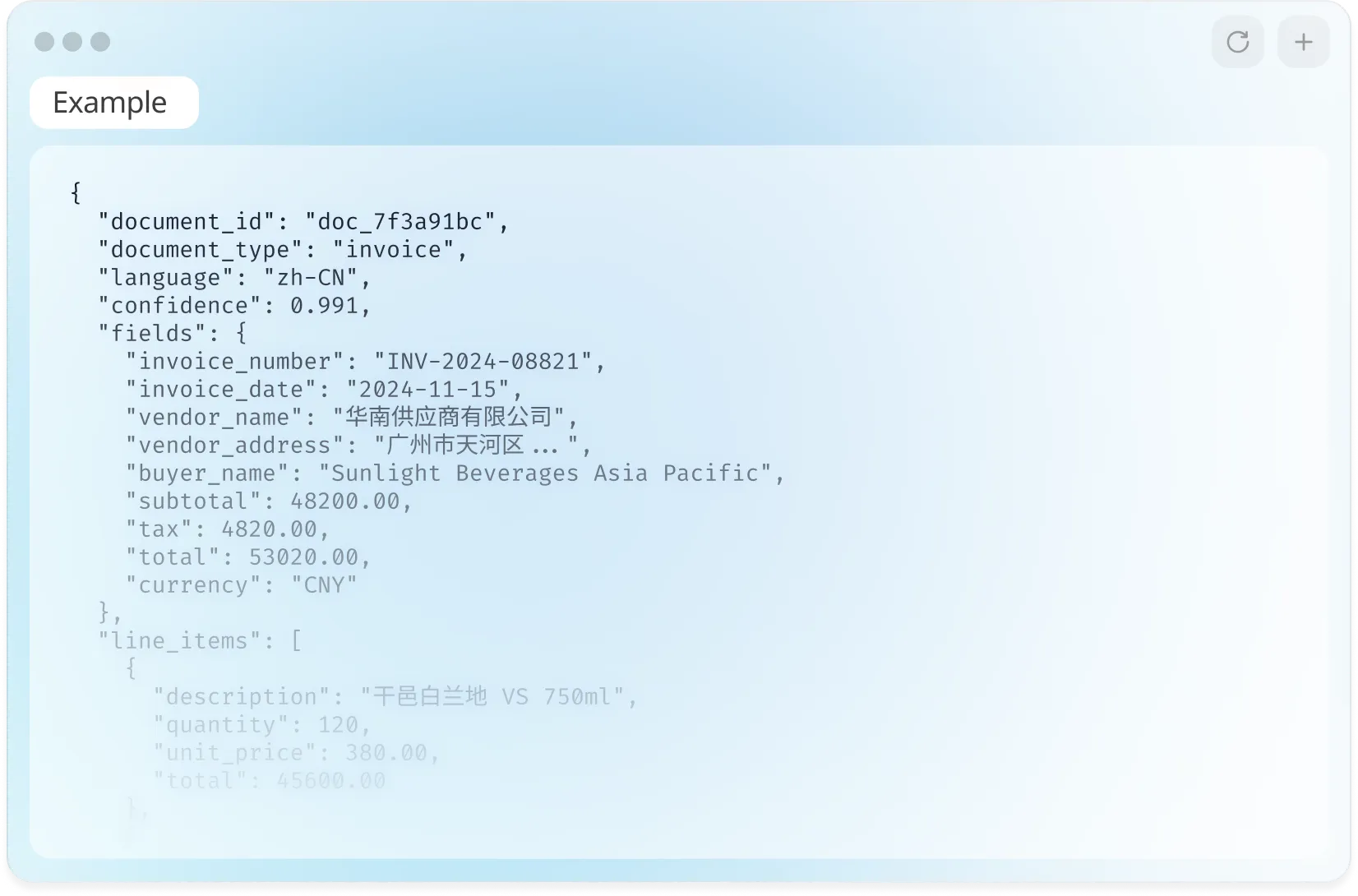
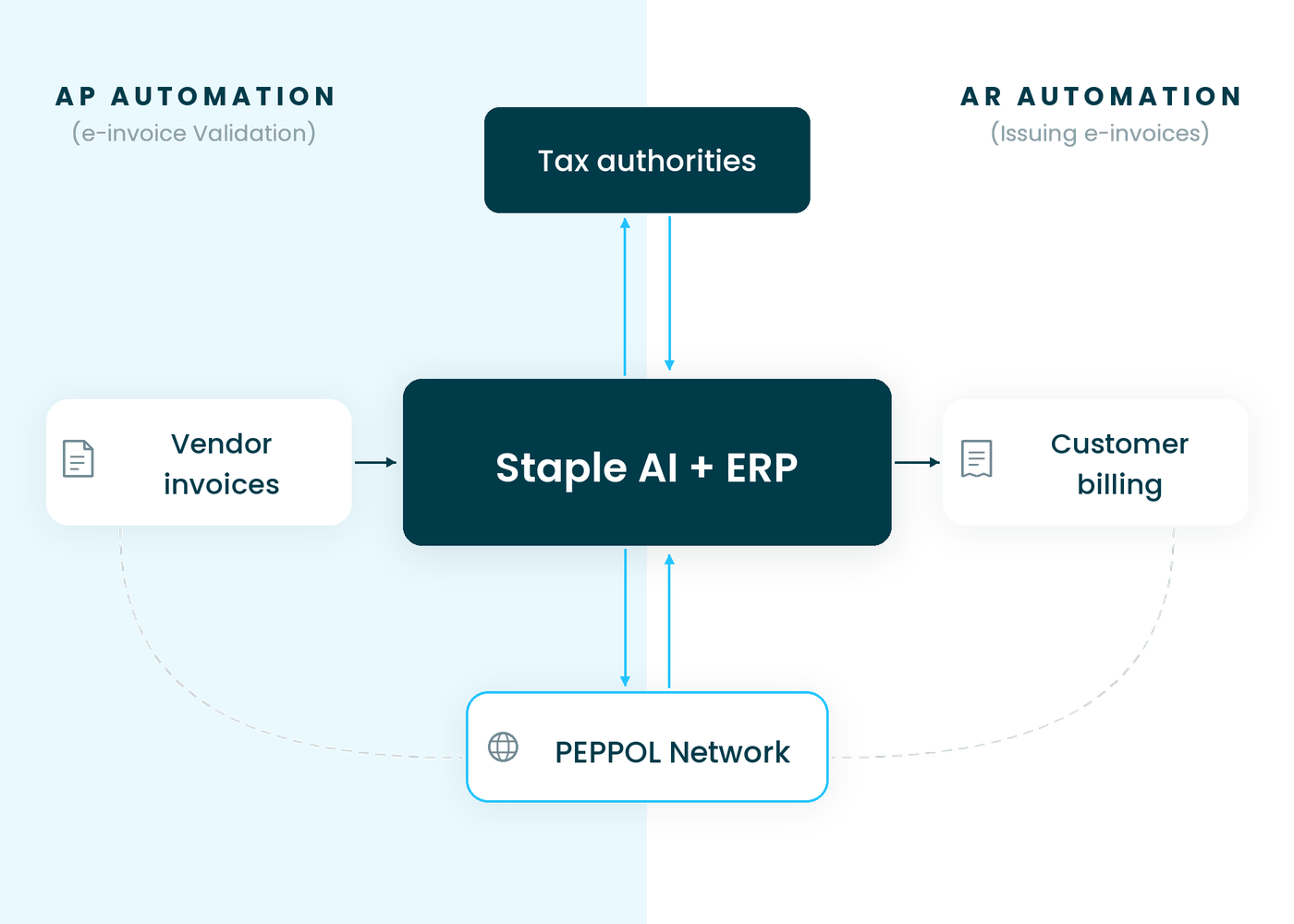
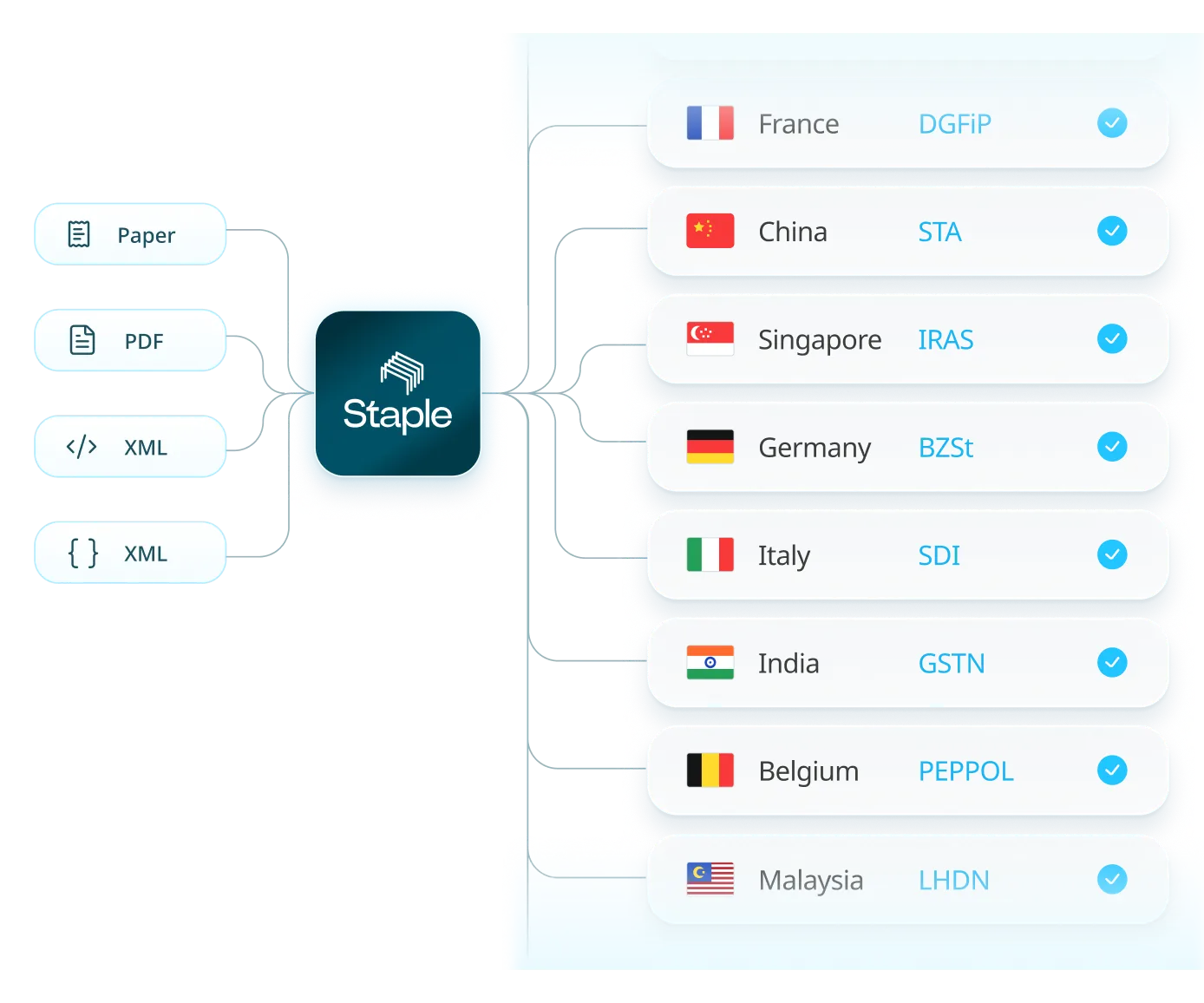
As an accredited PEPPOL Access Point, Staple authenticates e-invoices, runs duplicate and signature-integrity checks, renders a human-readable copy, and supports archival. It can retrieve the official validated copy from the tax authority, so you hold a verifiable record, not just a received file.
For the full country coverage, mandates, and onboarding, checkout Global E-Invoicing.
Structured and Unstructured in One Flow
Network e-invoices and PDF invoices, handled the same way.
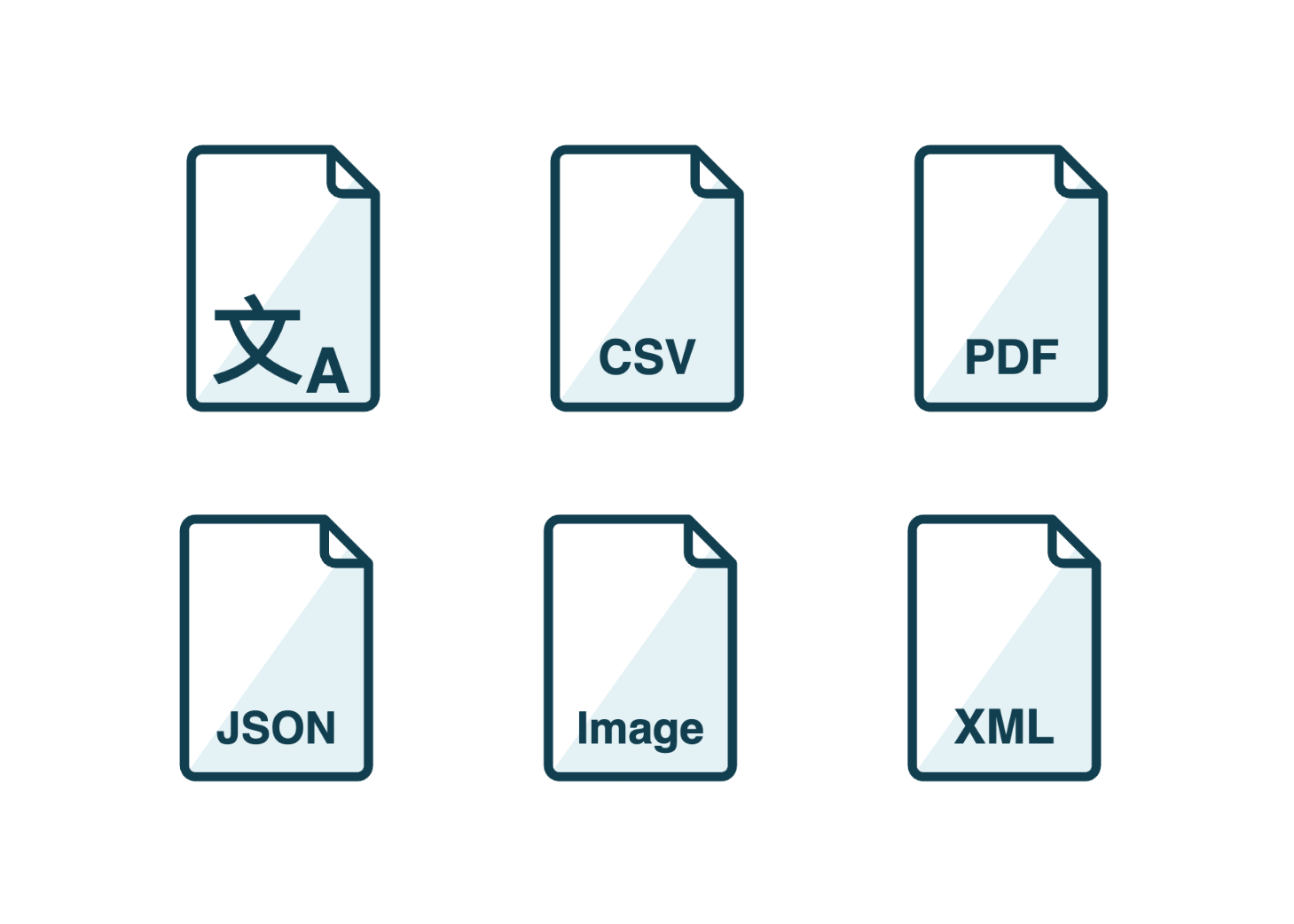
Structured e-invoices arriving through a network and unstructured invoices arriving as PDFs or scans are normalized into one flow.
Validation, checks, and downstream handling are consistent regardless of how the invoice came in.
Country Coverage
Clear on what's live and what's coming.
Staple supports live e-invoicing in markets including Singapore, Malaysia, and China, with further markets in progress.
Coverage expands through the same extensible layer, and the platform is explicit about which markets are supported today and which are planned, so you're never guessing.
See the complete list of supported and upcoming markets on the Global E-Invoicing page.



Business Rules & Anomaly Detection
Apply your own rules to headers and line items, and flag exceptions automatically.

Cross-Source Reconciliation
Reconcile values and line items across related documents automatically.

AI Contextual Verification
Understand what data means in context, and expose the reasoning for review.
See external validation on your own invoices.
Book a 30-minute demo. Bring invoices from the markets you operate in, and we'll validate them against the relevant sources live.
FAQ
What is external validation in Staple?
External validation is the step where Staple checks extracted data against authoritative outside sources, tax authorities, business registries, identity and credit services, rather than trusting the document alone. It confirms that a claim on a document matches what the relevant external system says, at the point of processing.
Is Staple connected to e-invoicing networks?
Yes. Staple operates as an accredited PEPPOL Access Point and connects to tax authority networks such as InvoiceNow in Singapore and MyInvois in Malaysia. It handles authentication, duplicate checks, signature integrity, and can retrieve the official validated copy from the tax authority.
Can we add our own validation sources?
Yes. Beyond the built-in sources, Staple exposes an API and webhook pattern so you can add customer-specific validation services. New sources plug into the same layer rather than becoming a separate integration to maintain.
Does Staple handle both structured e-invoices and unstructured invoices?
Yes. Structured e-invoices from networks like PEPPOL and unstructured invoices such as PDFs and scans are processed in one normalized flow, so validation and downstream handling are consistent regardless of how the invoice arrived.
Which countries are supported for e-invoicing?
Staple supports live tax-authority e-invoicing in markets including Singapore, Malaysia, and China, with further markets in progress. Because the integration layer is extensible, supported markets expand over time, and the platform clearly distinguishes markets that are live from those that are planned.