
Data Extraction & Enrichment
Extract structured, enriched data from complex documents.
Extraction isn't just reading text off a page. Staple captures every field, including handwriting, stamps, and dispersed information, then normalizes and enriches it, so what your systems receive is clean, consistent, and ready to use, not raw output someone still has to fix.
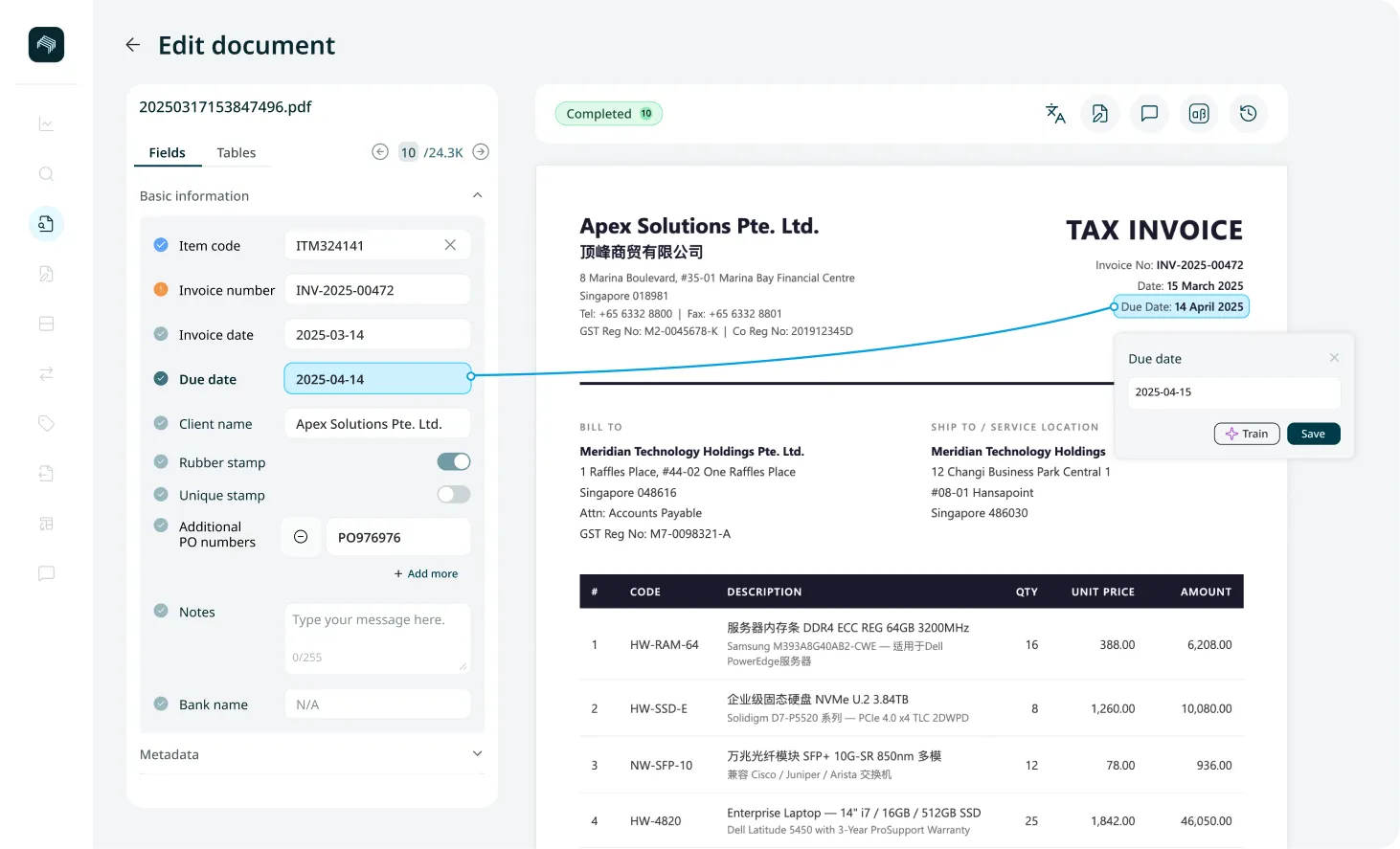
Reading the document is easy. Making the data usable is not.
Real documents don't cooperate. A total sits in a different place on every supplier's invoice. Line items span pages.
A handwritten note or a stamp carries information the printed text doesn't. A date is written five different ways.
Basic extraction captures some of this and mangles the rest, and your team spends its day correcting fields that were "captured" but wrong.
How Staple extracts and enriches
Context-based Extraction
Reads by meaning, not by template
Staple extracts across structured, semi-structured, and unstructured content by understanding what a field means, not where it sits. There's no template to build per supplier, so a layout Staple has never seen is still read correctly.
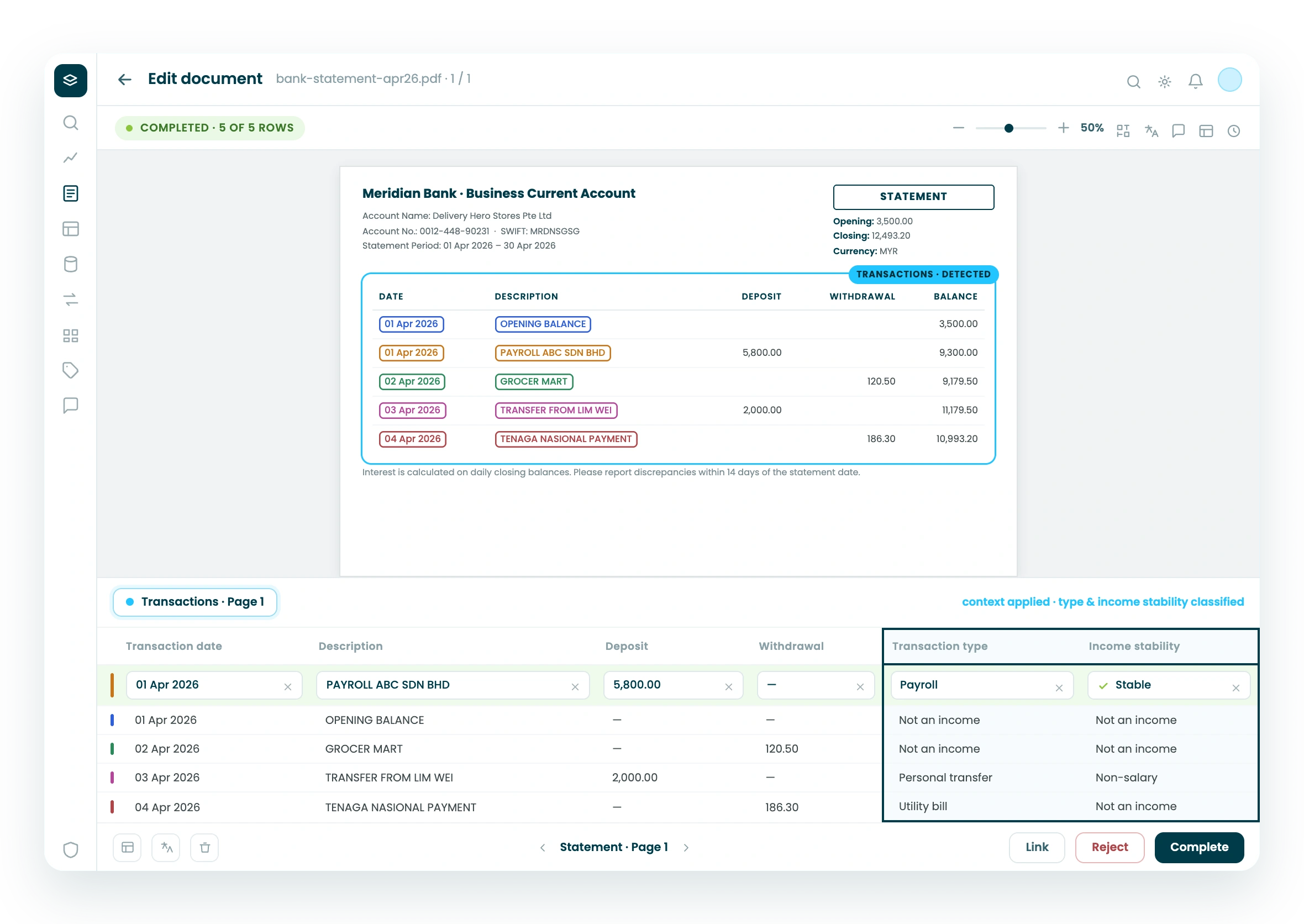
Everything on the document, not just the printed fields
Header fields, line items, handwriting, and stamps.
Staple captures header fields, full line-item detail, handwritten entries, stamps, and information dispersed across the page. The parts that defeat template-based tools are exactly the parts Staple is built to read.
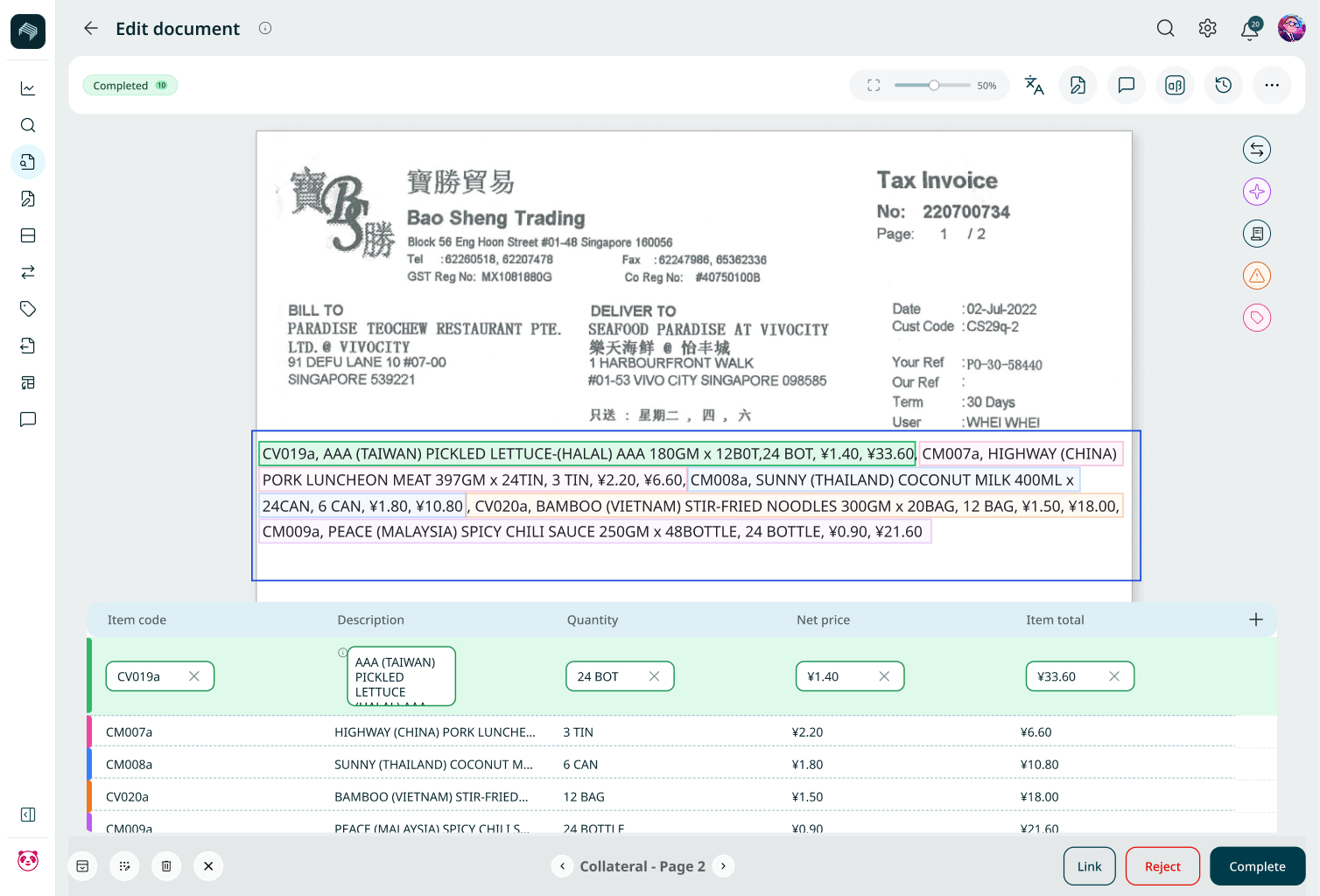
Normalization
One consistent format, whatever the source.
Dates, currencies, names, units, and supplier identifiers are normalized into consistent, system-ready values. A date written three ways across three documents becomes one standard value your systems can act on.
Enrichment
Fills in what the document leaves implicit.
Staple enriches extracted data using your master data and contextual inference, matching a supplier to your vendor record, resolving a code to its full description, so the output is not just what the document said, but what your systems need.
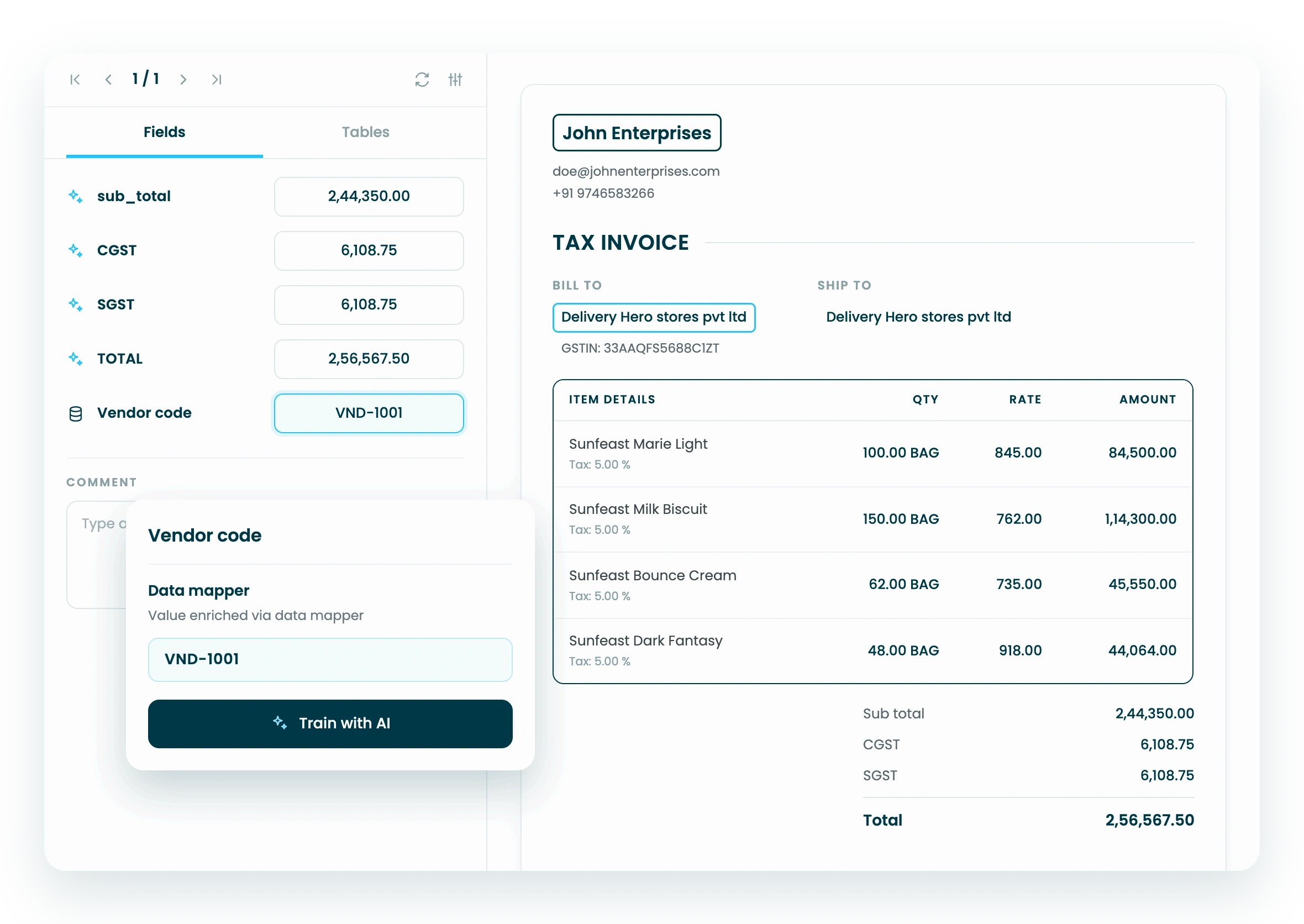
Field-level confidence and human validation
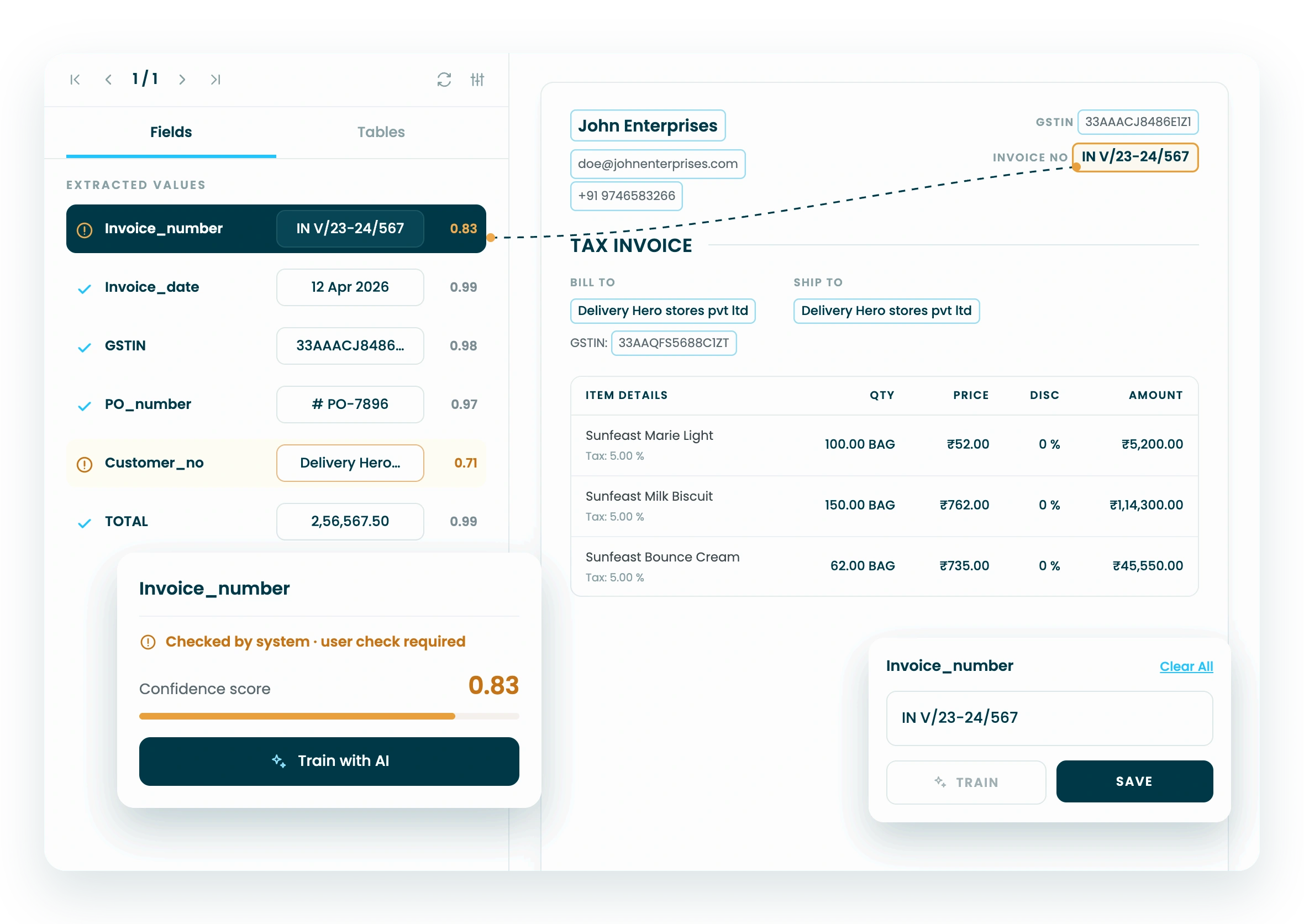
Every field carries a confidence score and its evidence
Each extracted field comes with a confidence score and a link to where it was found on the source.
Low-confidence fields are routed for quick human review, so people spend time only on the few values that actually need a second look.



Intelligent Tables
Read messy, multi-page tables and capture line items even when layouts aren't clean.

AI Contextual Verification
Check each field against the document's context to catch values that don't make sense.

Multilingual Processing
Extract and validate across 300+ languages with no manual translation.
See extraction run on your hardest documents.
Book a 30-minute demo. Bring the documents that break your current tool and we'll extract them live.
FAQ
What is data extraction and enrichment?
Extraction captures the information on a document, including headers, line items, handwriting, and stamps. Enrichment then makes that data usable: normalizing formats, matching entities to your master data, and resolving codes to full values. Together they turn a raw document into structured, system-ready business data.
Isn't this just OCR?
No. OCR converts an image into characters. Staple reads a document by meaning, captures dispersed and handwritten information, normalizes it into consistent values, enriches it against your own records, and attaches field-level confidence and evidence. OCR gives you text; this gives you verified, usable data.
Can Staple extract data without a template for each document type?
Yes. Staple uses context-based extraction, so it reads a document by understanding what each field means rather than matching a fixed layout. A supplier or format Staple has never seen before is still extracted correctly, with no template to build or maintain.
How does Staple handle handwriting, stamps, and messy layouts?
These are captured as part of standard extraction. Staple reads handwritten entries, stamps, and information spread across a page, and structures line items even when they aren't in clean rows or columns, the cases where template-based tools typically fail.
How do I know whether an extracted field is correct?
Every field carries a confidence score and a link to its exact location on the source document. High-confidence fields flow straight through; low-confidence fields are routed for quick human review. This means the data is auditable at the field level and people only check the values that genuinely need it.