
Extraction tells you what the document says.
It doesn't tell you what to do about it.
Once data is captured, someone still has to check it against policy: confirm the totals reconcile, that the amount is within approval limits, that it isn't a duplicate of last month's invoice, that no required field is blank.
In most operations a person does this by eye, inconsistently, and the exceptions that matter get lost in the volume that doesn't.
How Staple turns rules into decisions
Arithmetic, Threshold, Duplication, and Policy Checks
Check the things a reviewer would, on every document.
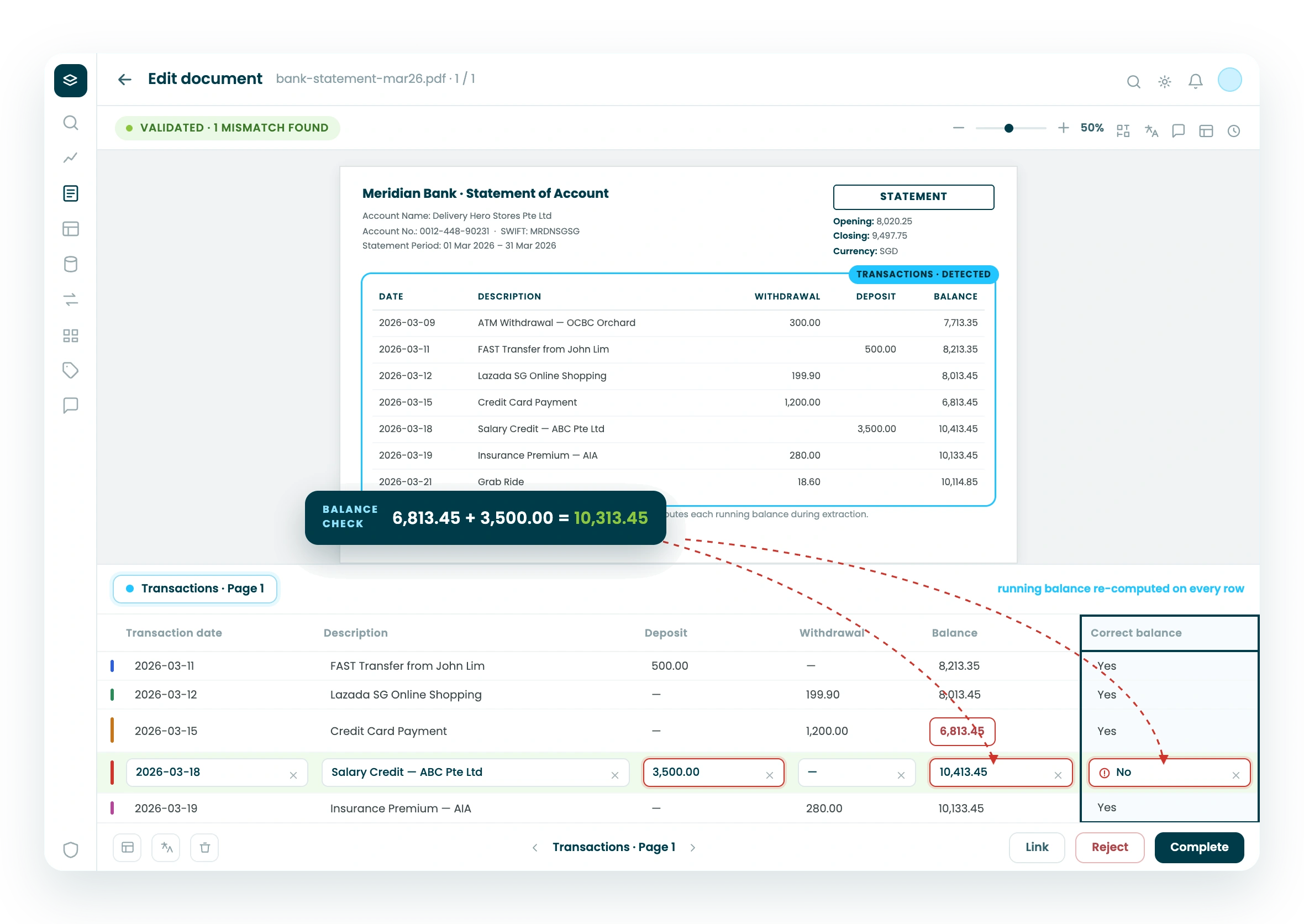
Staple runs the full range of checks automatically: arithmetic (do the line items sum to the total), threshold (is the value within limits), completeness (are required fields present), duplication (has this document been seen before), and policy (does it meet your own business rules).
Every document is checked the same way, every time.
No-Code Rule Creation and Version Management
Build and change rules without engineering.
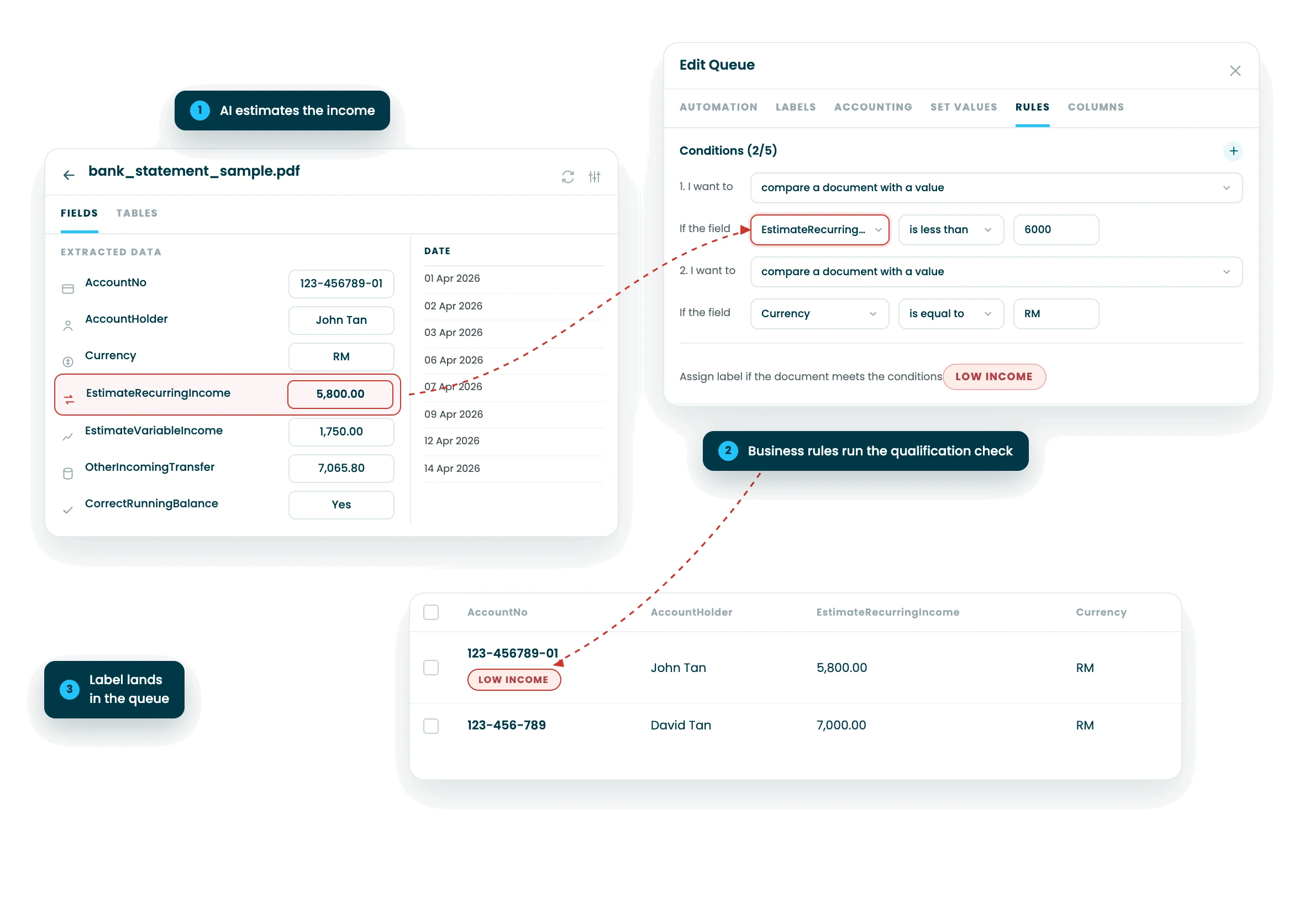
Rules are created and edited through no-code configuration, so operations and finance teams set their own policy directly.
Rule versions are managed in a controlled way, so you always know which rule was in force when, and changing a rule never erases the history behind it.


Audit Evidence
Every decision is on the record.
For every check, Staple records the rule applied, its version, the result, the reviewer, and the timestamp.
A decision made about a document months ago can be explained and defended, not reconstructed from memory or email.

Anomaly Analysis
Catch anomalies using your rules.
Beyond fixed rules, Staple analyzes anomalies across fields, line items, and historical patterns where available.
A value that is technically within policy but out of pattern, an unusual quantity, an off-trend amount, is surfaced, so problems no one wrote a rule for still get caught.

Outcome Routing
Every result goes somewhere, automatically.
Based on the checks, Staple routes each document: accept it, reject it, hold it while more information is requested, or send it for human review.
The decision is applied consistently, and only genuine exceptions reach a person.


AI Contextual Verification
Understand what data means in context, and expose the reasoning for review.

Cross-Source Reconciliation
Reconcile values and line items across related documents automatically.

External Validation & E-Invoicing
Validate data against tax authorities, registries, and e-invoicing networks.
See your own rules run on your own documents.
Book a 30-minute demo. Bring your policies and a batch of documents, and we'll set up rules and route the exceptions live.
FAQ
What are business rules and anomaly detection in Staple?
It is the layer that turns extracted data into operational decisions. Staple applies your own configurable rules to headers and line items, arithmetic, threshold, completeness, duplication, and policy checks, detects anomalies, and routes each document to the right outcome, with the rule and result recorded for audit.
Do I need engineering to create or change rules?
No. Rules are created and edited through no-code configuration, and rule versions are managed in a controlled way, so business and operations teams can adjust policy themselves without developer involvement and without losing the history of what changed.
What kinds of checks can Staple run?
Staple runs arithmetic checks such as totals reconciling, threshold checks such as values within limits, completeness checks for missing required fields, duplication checks against prior documents, and policy checks against your own business rules. It also analyzes anomalies across fields, line items, and historical patterns where available.
What happens when a document breaks a rule?
Each outcome is routed automatically. Depending on the rule, a document can be accepted, rejected, held while more information is requested, or sent for human review. Clean documents pass through, and only exceptions require attention.
Is there an audit record of rule checks?
Yes. Staple records which rule was applied, its version, the result, the reviewer, and the timestamp for every check. This means a decision made about a document can be explained and defended later, not reconstructed from memory.