
Document Layer
Validate your documents before extraction.
The Document Layer is the first stage of the first mile. Staple receives files from any channel, prepares them for processing, and checks the document itself for tampering, all before any data is pulled. Nothing moves downstream until Staple knows what a document is and whether it can be trusted.
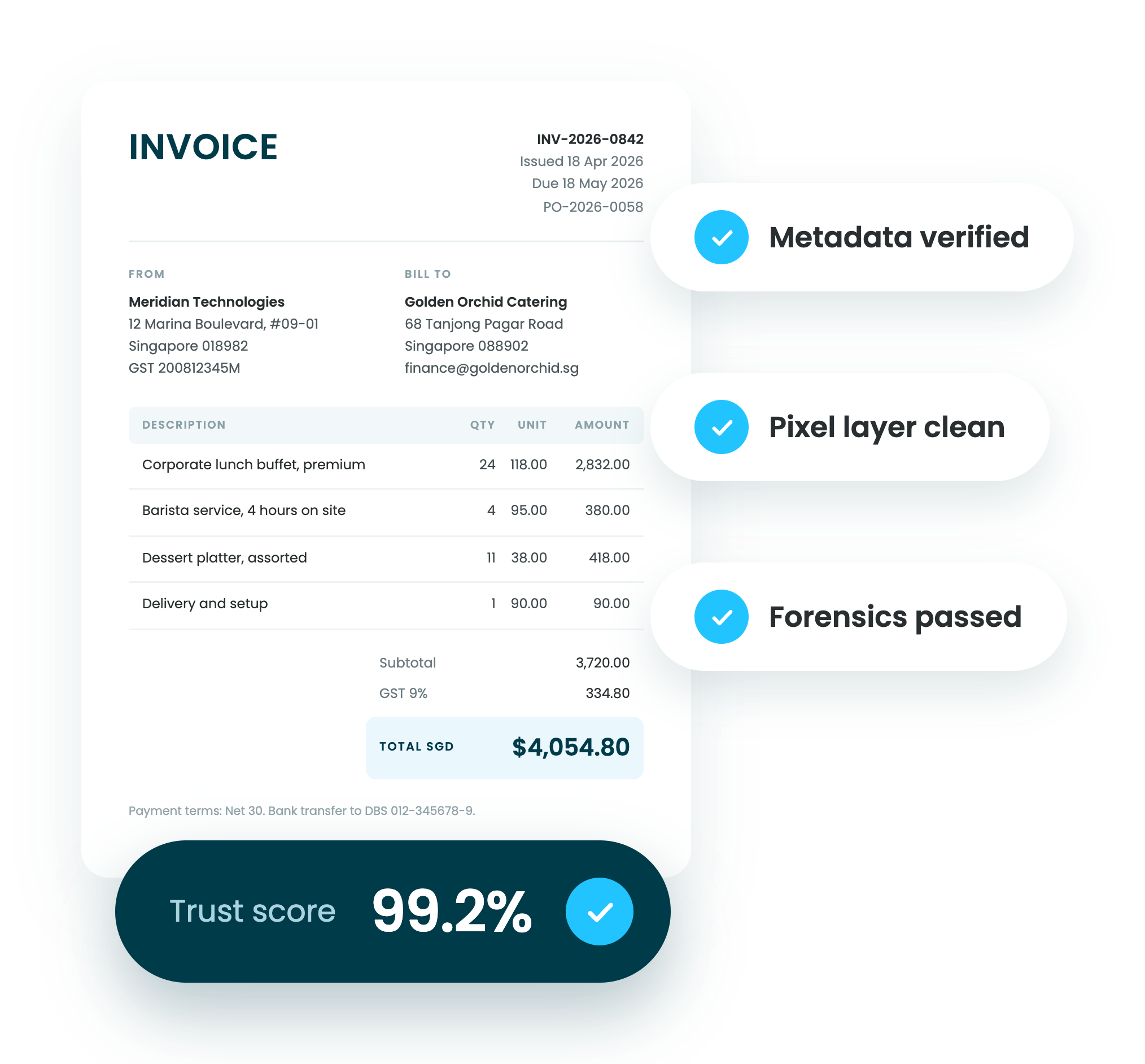
Bad data is a known problem. A bad document is the problem nobody checks for.
Every extraction tool assumes the document it's handed is genuine. But in a global operation, documents arrive from thousands of external parties, and some of them are altered, forged, or corrupted before they ever reach you. If you extract first and check later, a fabricated invoice or a doctored statement is already inside your systems before anyone looks.
The Document Layer moves that check to the front. It treats the file itself as something to be verified, not just a container to read.
- Before Staple: documents land in mixed batches across email, portals, drives, and APIs, sorted and opened by hand, with no check on whether the file is authentic.
- What the Document Layer handles: receiving, preparing, classifying, and forensically checking every document before extraction begins.
- What comes next: only genuine, correctly sorted documents pass to the Data Layer for extraction and verification.
What the Document Layer does
Three stages prepare and verify every document before extraction begins.
Ingestion & Pre-processing
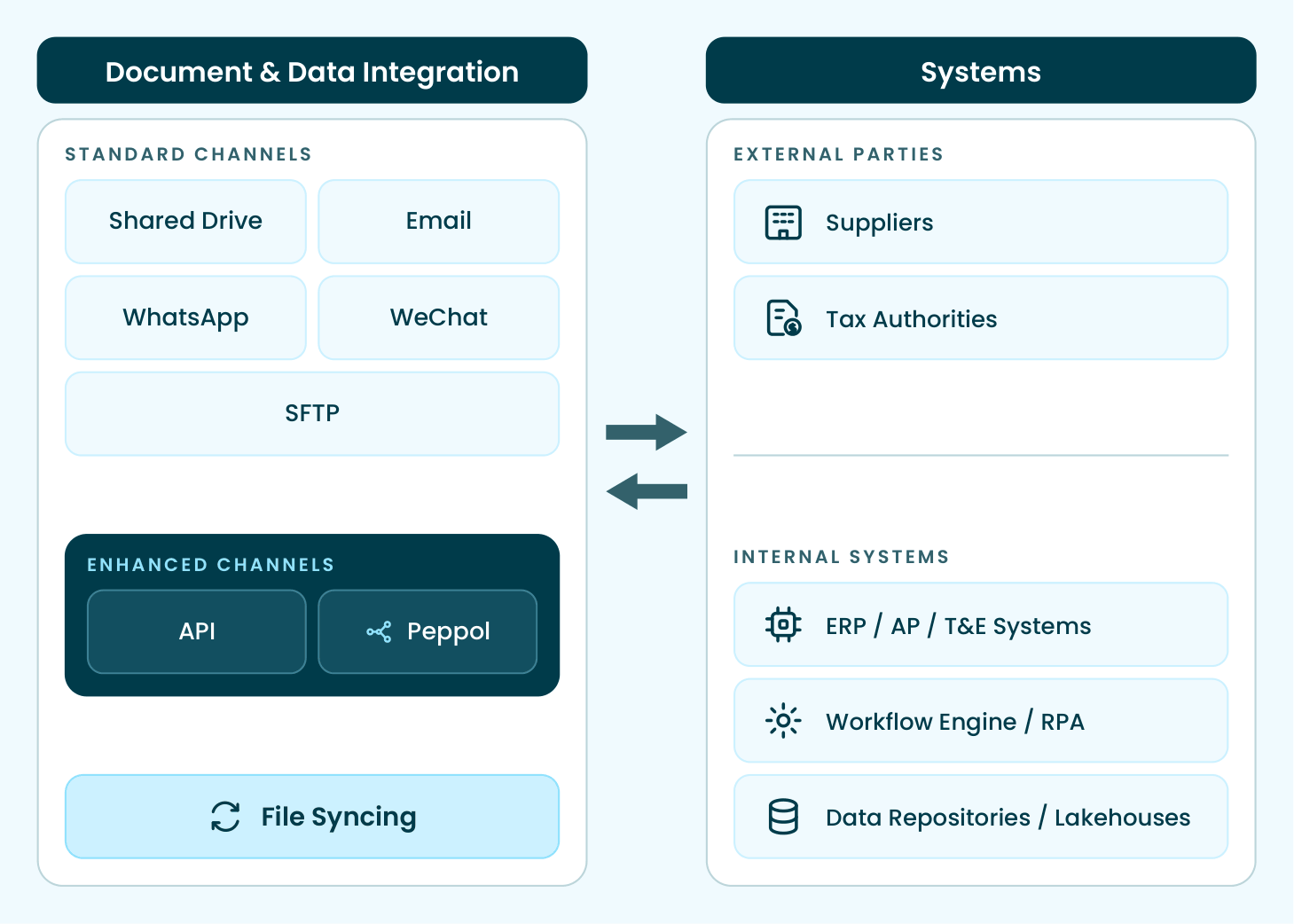
Receives files from any channel and any format, email, SFTP, portals, APIs, and prepares each one for processing. No manual sorting, no per-source setup.
Classification & Splitting
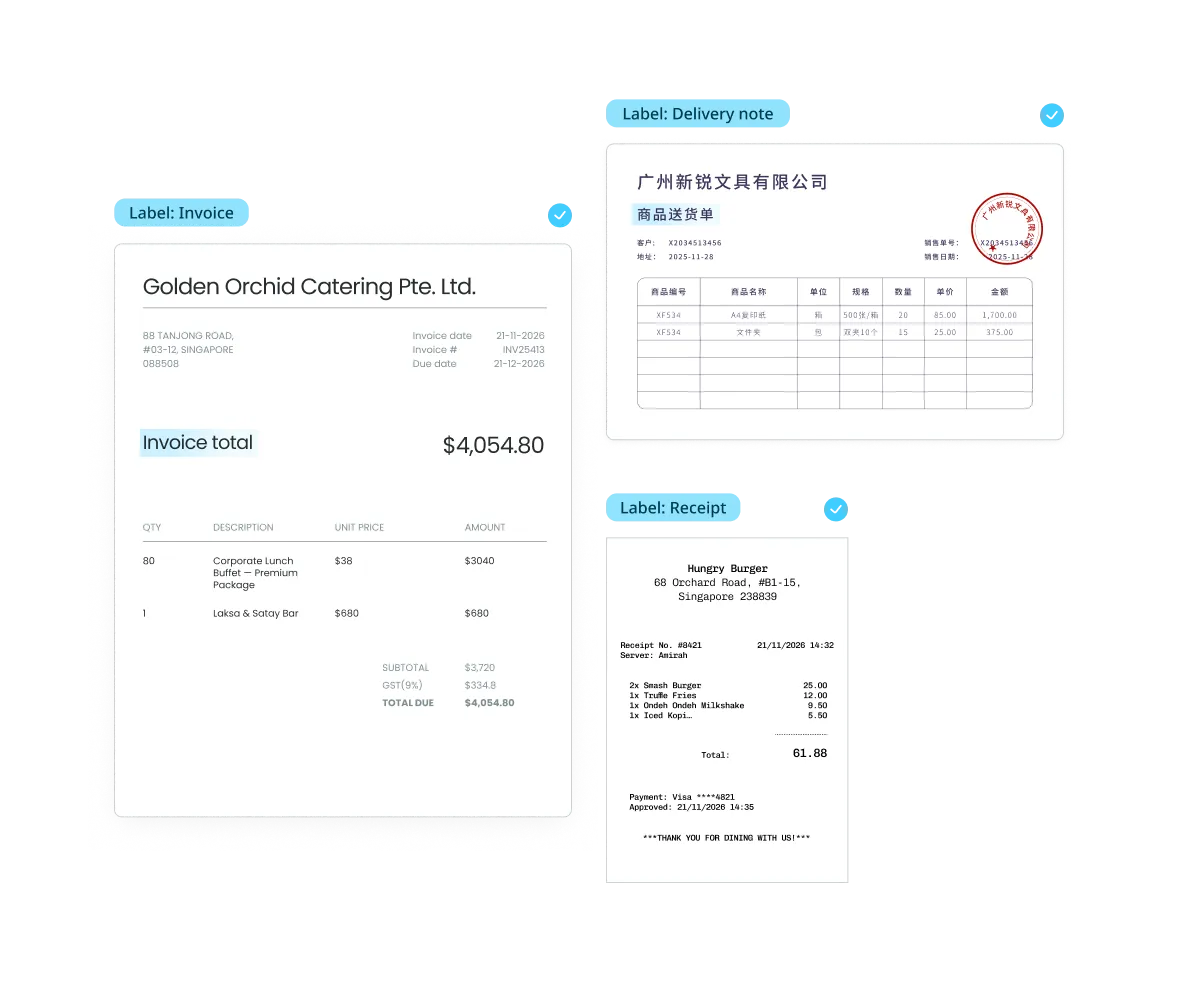
Identifies each document type automatically and splits mixed batches, so a single upload of invoices, statements, and forms is separated and routed correctly.
Document Tampering Detection
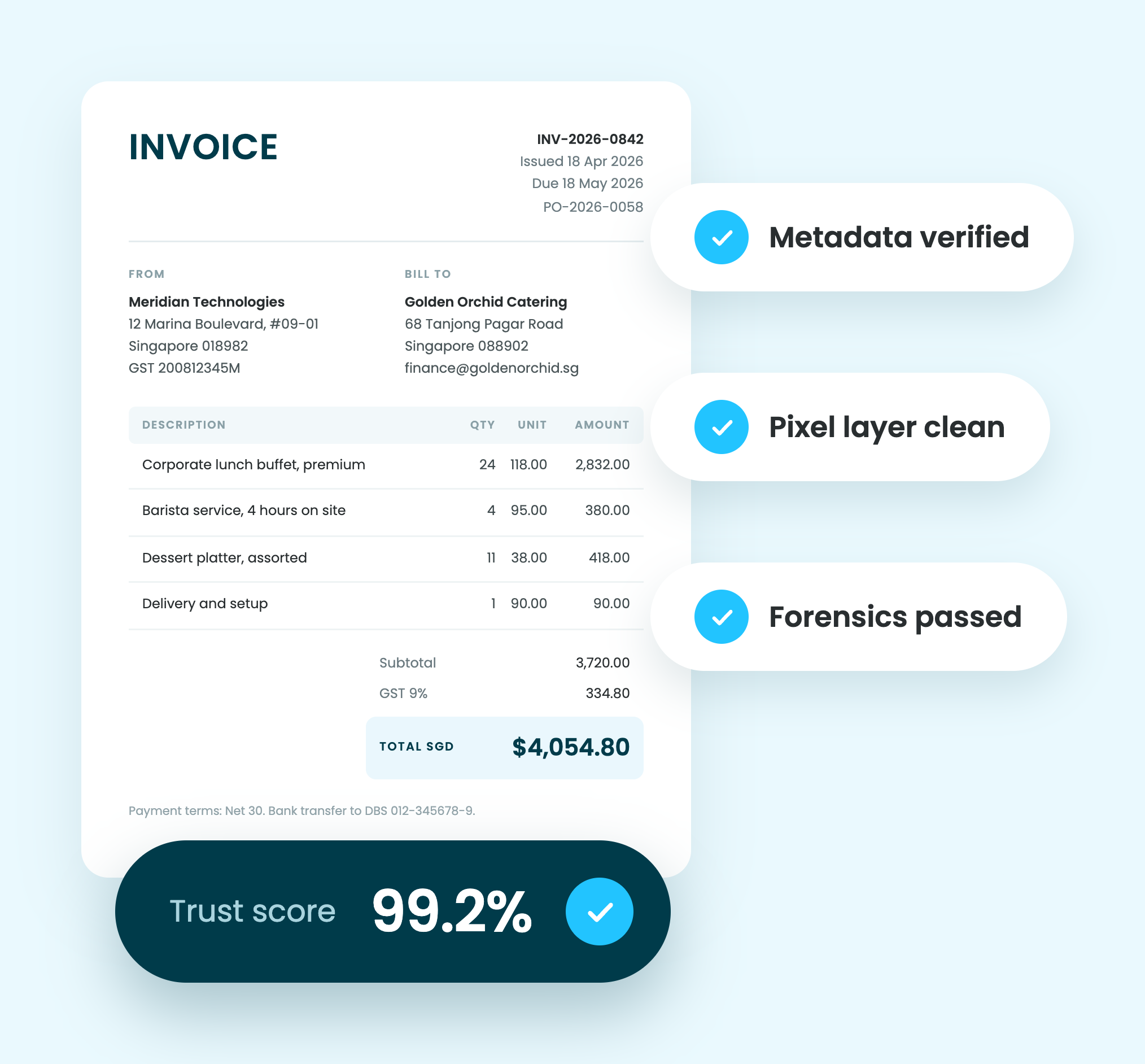
Runs file-metadata and pixel-level forensic checks to catch edits the human eye cannot see. Every document gets a tamper confidence score and a supporting evidence trail.
File Lifecycle Management
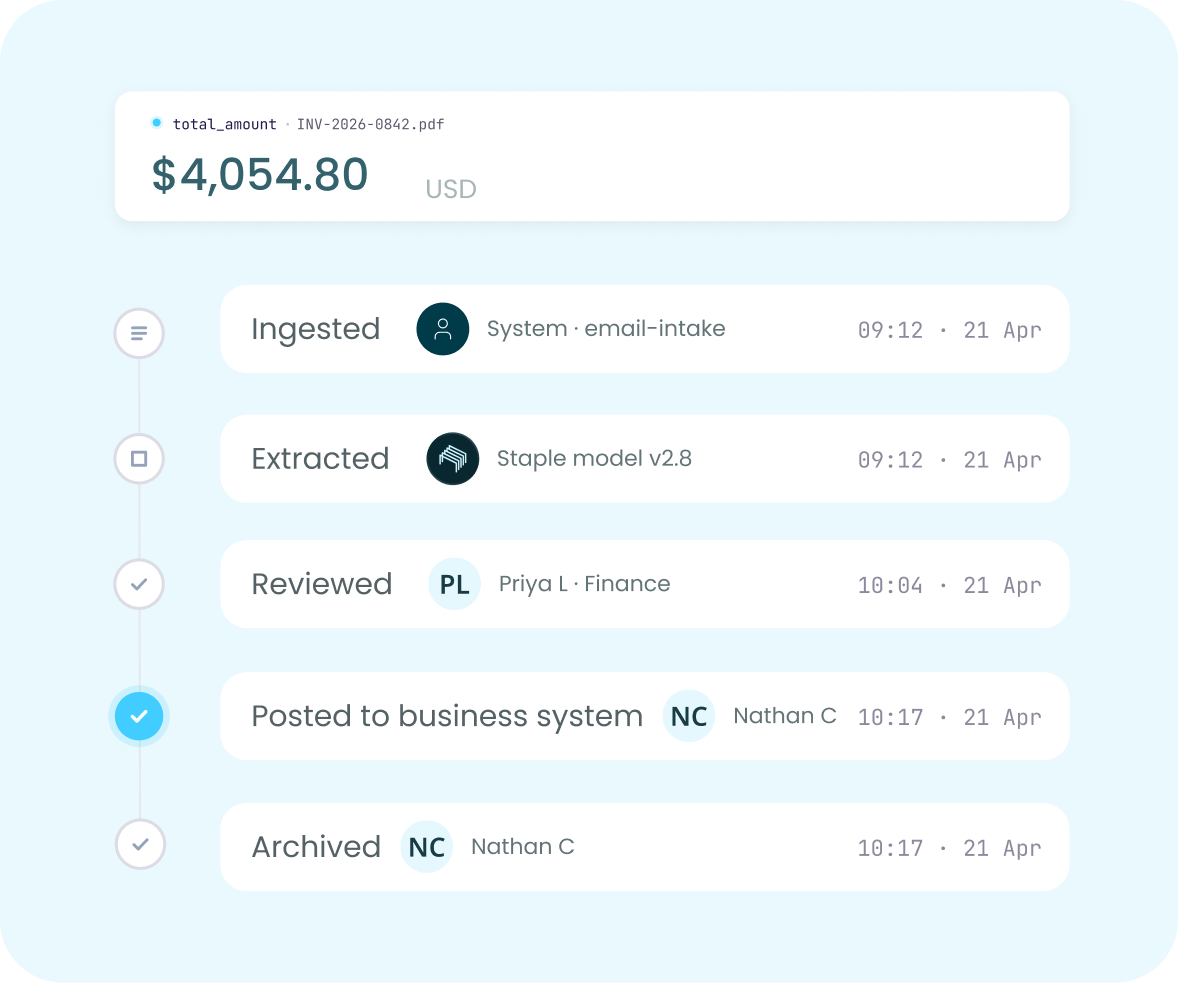
Tracks every document from arrival to handoff, so even document handling is logged and auditable, not just the data pulled from it.



See the Document Layer run on your own files.
Book a 30-minute demo. Bring your documents and we'll show you what Staple catches before extraction even begins.
FAQ
What is the Document Layer in Staple's platform?
The Document Layer is the first stage of first-mile processing. It covers everything Staple does to a document before extraction: receiving it from any channel, preparing it, classifying its type, splitting mixed batches, and running forensic checks to confirm the file has not been tampered with. Its job is to make sure only genuine, correctly identified documents move on to data extraction.
How does Staple detect a tampered or forged document?
Staple analyzes the file itself, not just its contents. It examines file metadata such as creation date, modification history, and software origin, and runs pixel-level and image anomaly analysis that catches visually clean fabrications the eye cannot see. Each document receives a tamper confidence score with a supporting evidence trail, so a suspicious file is flagged before any data is extracted.
What document formats and channels can Staple ingest?
Staple accepts documents from email, SFTP, portals, and APIs, in any format including PDFs, scans, photos, dot-matrix prints, and native digital files. Mixed batches are handled automatically, so there is no need to separate document types or sources before uploading.
How does classification and splitting work?
When a batch arrives containing multiple document types, Staple identifies each document automatically and separates it, so invoices, statements, delivery notes, and supporting documents are each routed correctly. This removes the manual sorting step that normally sits in front of any extraction process.
Why check the document before extracting the data?
Because extracted data is only as trustworthy as the document it came from. If a file has been altered or forged, extracting it cleanly just moves a fraudulent value into your systems faster. Checking the document first means a compromised source is caught at intake, not discovered in a downstream audit.