
Data Layer
Turn raw documents into clean, consistent, verified data.
Pulling text off a page is the easy part. The Data Layer is everything that makes that data usable: structuring it, enriching it, verifying it against real sources, and reconciling it across documents, so what reaches your systems is already correct, not just captured.
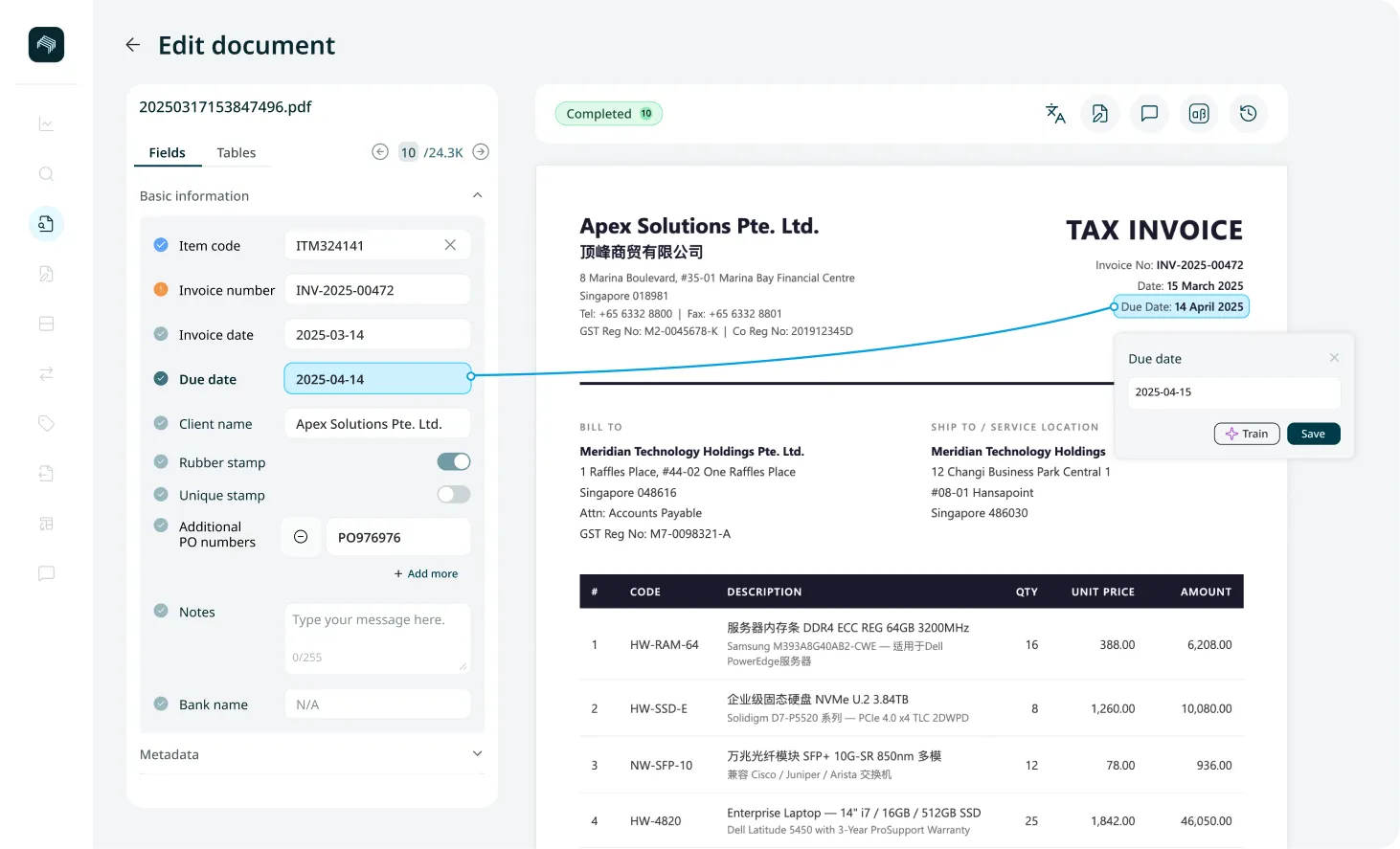
Extracted data is not the same as trustworthy data.
Most tools stop at extraction. They hand you fields off a document and call it done, leaving your team to catch the mistakes: a misread total, a supplier name that doesn't match your records, a tax number that doesn't validate, two documents that disagree. Those errors are invisible until something downstream breaks.
The Data Layer closes that gap. It doesn't just read a document, it makes the data consistent, checks it against external sources, and reconciles it across related documents before anything moves on.
- Before Staple: extracted fields land in your systems unchecked, and errors surface later in payments, filings, or audits.
- What the Data Layer handles: extraction, multilingual processing, table structuring, verification, validation, and reconciliation.
- What comes next: clean, verified data passes to the Trust Layer to be sealed, then delivered.
What the Data Layer does
Data Extraction & Enrichment
Converts complex documents into structured, normalized, enriched data downstream systems can use immediately.
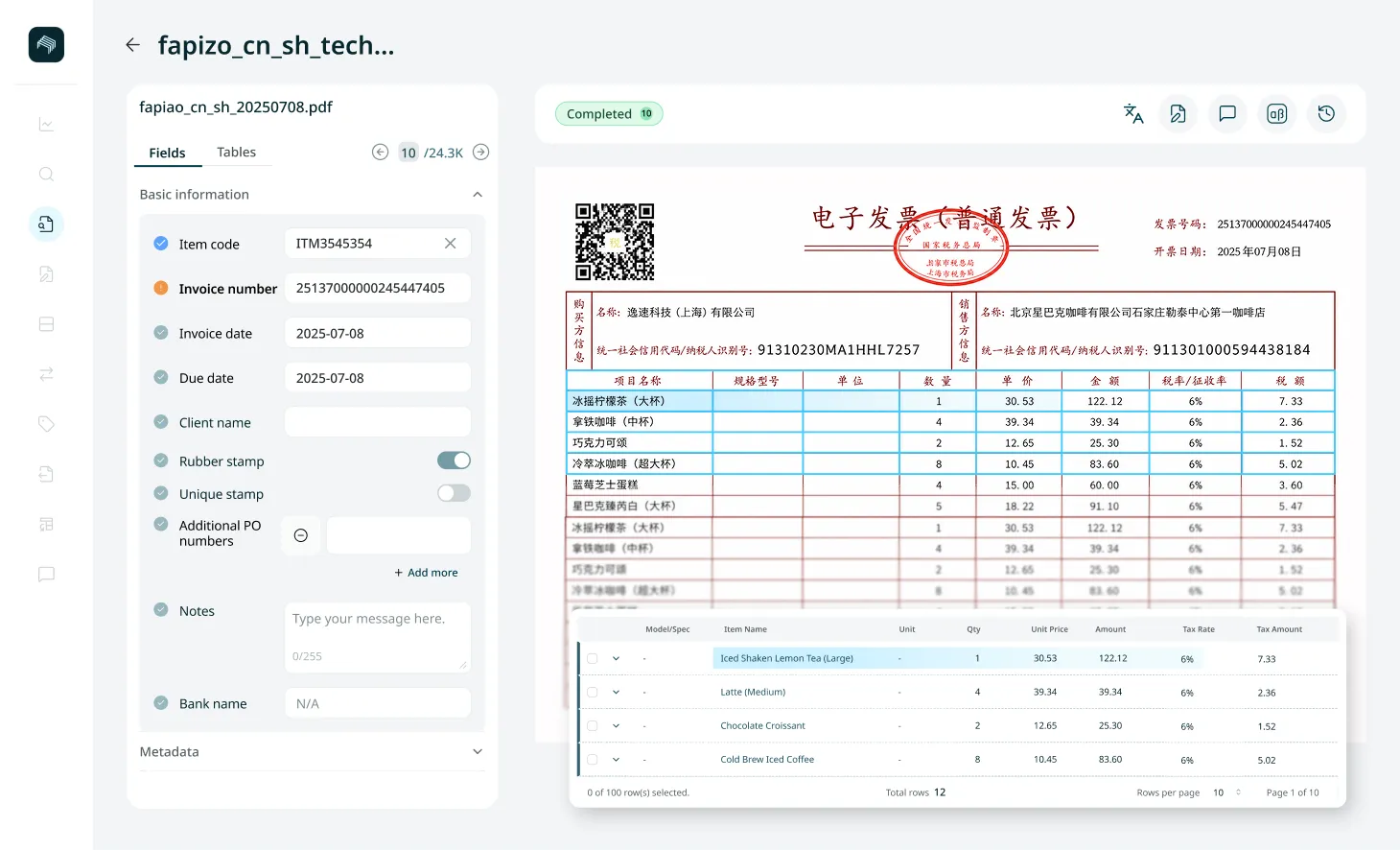
Multilingual Processing
Reads, extracts, and validates across 300+ languages, no manual translation, no per-language setup.
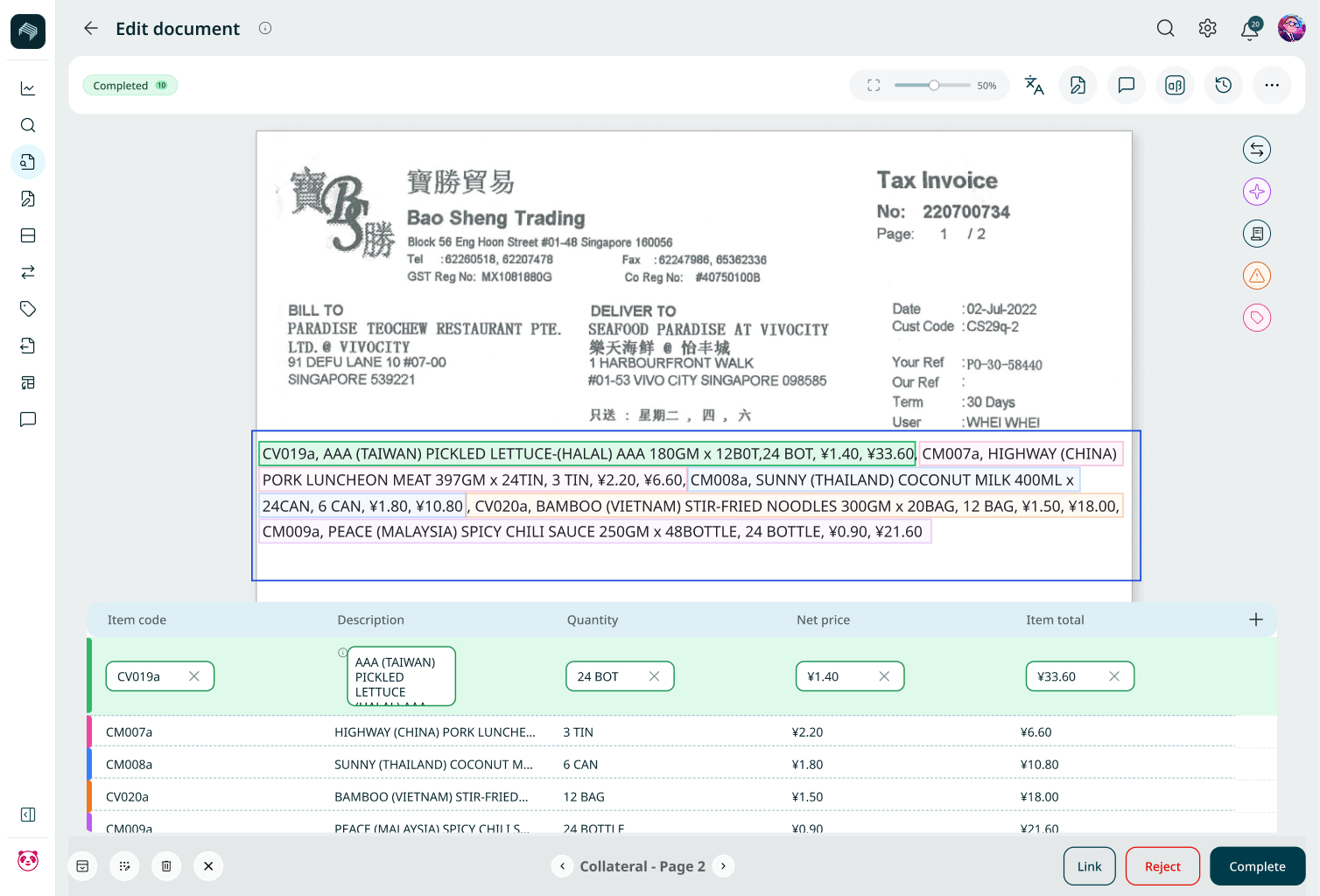
Intelligent Tables
Reads messy, inconsistent, and multi-page tables, capturing line items even when layouts aren't clean.
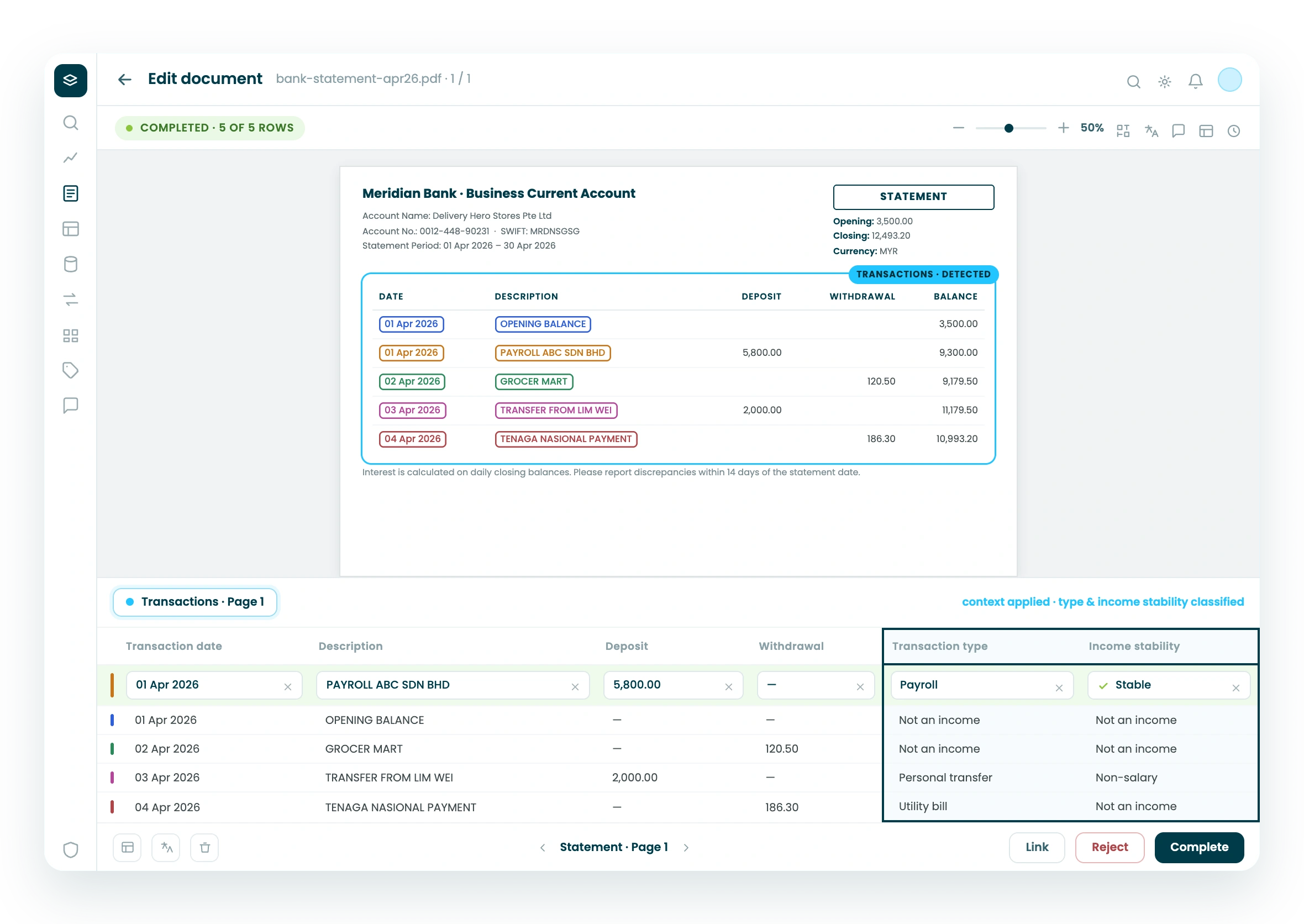
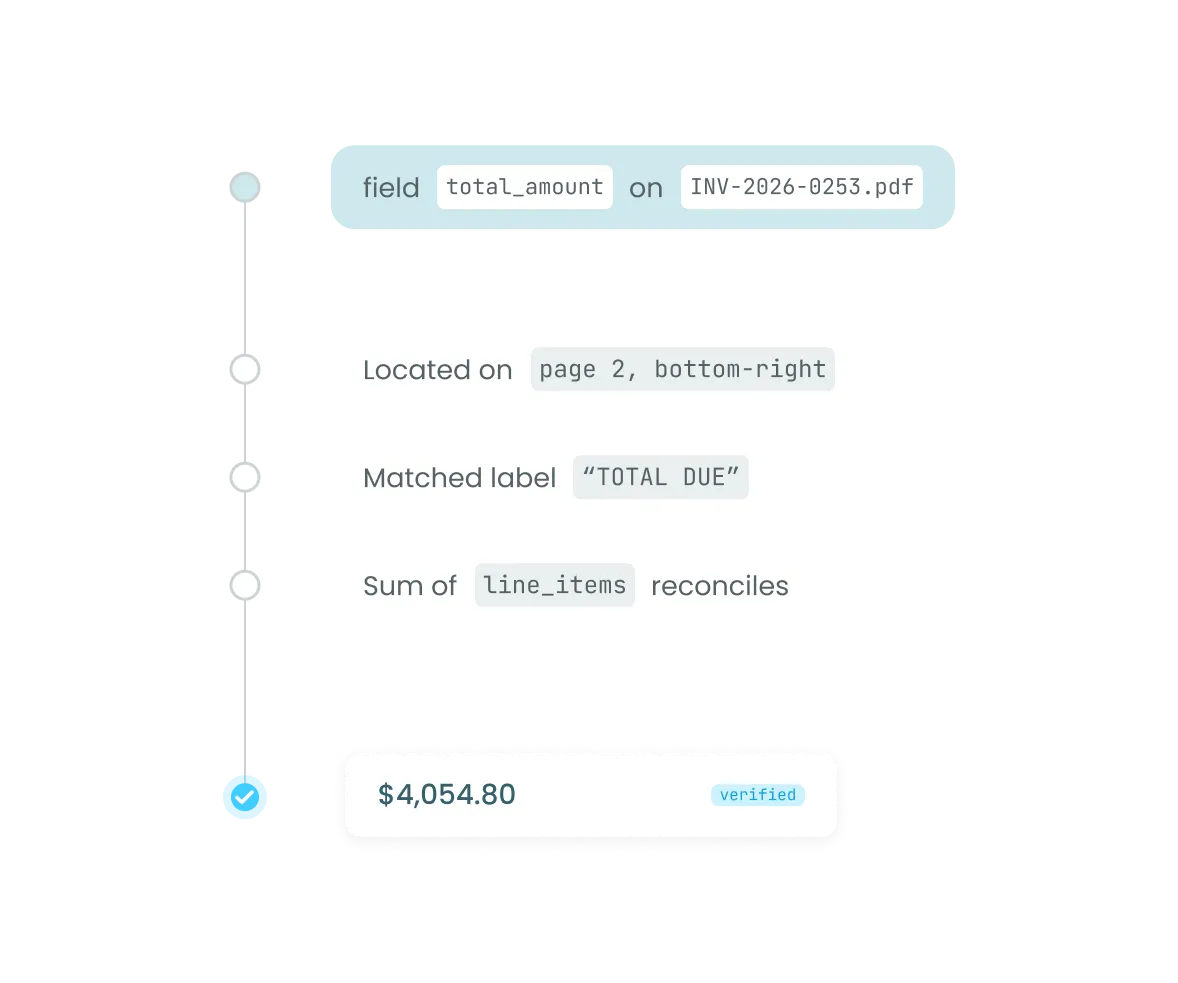
AI Contextual Verification
Checks each field against the document's own context, catching values that were captured but don't make sense.
Business Rules & Anomaly Detection
Applies your own rules and flags outliers at the point of extraction, before they reach a downstream process.
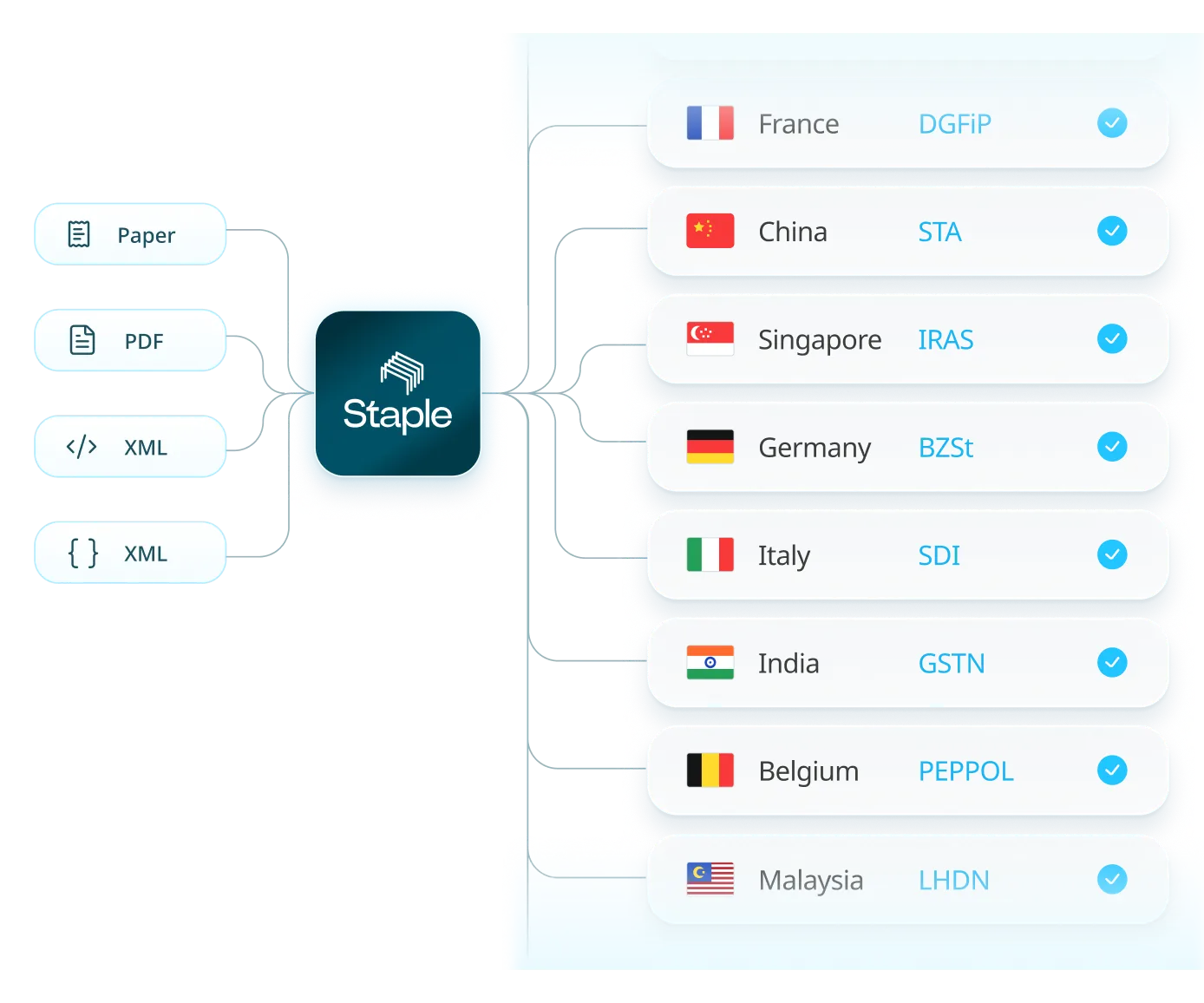
External Validation & E-Invoicing
Validates data against tax authorities, registries, and e-invoicing networks, so what you record is externally confirmed.
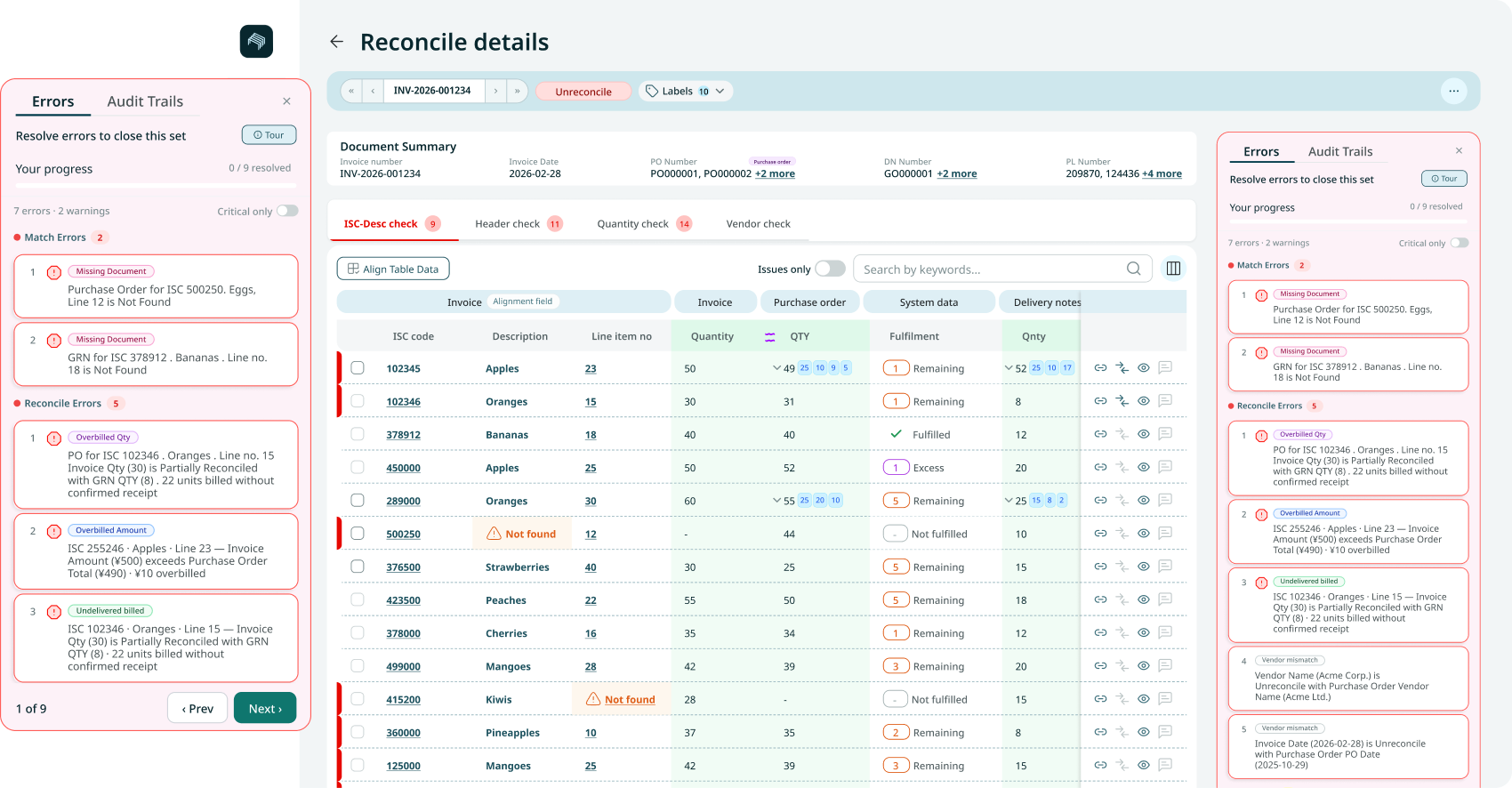
Cross-Source Reconciliation
Reconciles values, quantities, and line items across related documents, so mismatches surface at intake, not in an audit.



See the Data Layer run on your own documents.
Book a 30-minute demo. Bring your hardest documents and we'll extract, verify, and reconcile them live.
FAQ
What is the Data Layer in Staple's platform?
The Data Layer is the stage of first-mile processing that turns raw document content into clean, verified, consistent business data. It covers extraction, multilingual processing, table structuring, contextual verification, business-rule and anomaly checks, external validation, and cross-source reconciliation. Its job is to make sure the data leaving it is not just captured but correct.
Isn't this just OCR or data extraction?
No. Extraction is one step inside the Data Layer. OCR reads characters off a page; the Data Layer structures that content, enriches it, verifies it against external sources, applies business rules, and reconciles it across documents. The output is verified data, not raw captured text.
Does the Data Layer handle structured and unstructured data?
Yes. Structured feeds, semi-structured forms, and fully unstructured documents, including scans, handwriting, and stamps, are all processed in the same pipeline across 300+ languages.
How does Staple verify data instead of just extracting it?
It checks data three ways: against the document's own context, against your configured business rules, and against external sources such as tax authorities and registries. It also reconciles the same information across related documents. A value that is captured but wrong is caught before it moves downstream.
Which child capability should I look at first?
It depends on your problem. For raw accuracy on hard documents, start with Data Extraction & Enrichment or Intelligent Tables. For correctness and compliance, look at AI Contextual Verification, External Validation & E-Invoicing, or Cross-Source Reconciliation.