
Sanctions and Screening Reconciliation Enhanced with AI Driven Document Matching and Auditability

Quick answer
AI sanctions screening reconciliation automates and improves the transaction monitoring process, utilizing document matching to ensure compliance and audit readiness. This technology reduces manual errors and increases efficiency, providing a competitive edge over firms still relying on traditional methods.
"It wasn't supposed to happen this way," the CFO murmured, as the audit results laid bare another costly oversight in sanctions screening. The gap wasn't monumental, but the ramifications were. As the board sifted through explanations and justifications, one thing became painfully clear: the manual processes meant to safeguard the organization were failing. Nearly every financial leader has faced sleepless nights over what might have gone unnoticed.
Consider this, each overlooked transaction isn't just a risk; it's a competitive vulnerability. The companies that continue to depend on manual sanctions screening are not simply playing with inefficiencies; they're rolling the dice on regulatory penalties. Imagine the cumulative costs of these discrepancies over time. The strategic implication here is enormous: efficiency isn't the only prize, resilience is.
The true revelation is this: AI-driven document matching for sanctions compliance isn't just a nice-to-have; it's essential armor in a high-stakes game. Real-time automation doesn't just mitigate human error; it offers a strategic moat against competitors still shackled by traditional methods. It's time to ask whether you're positioned for compliance success or destined for regulatory setbacks.
Understanding AI-Driven Sanctions and Screening Reconciliation
In principle, AI sanctions screening reconciliation involves utilizing artificial intelligence to automate and enhance the screening and reconciliation process. This includes everything from identifying high-risk transactions to ensuring compliance with international sanctions. The primary goal is to replace manual processes with advanced document matching systems, thus providing organizations with both efficiency and audit-ready screening reconciliation capabilities.
Manual Sanctions Screening Reconciliation:
• Manual sanctions screening requires considerable time investment, securing only marginal improvements in accuracy.
• Human error persists as a significant risk, frequently leading to oversight and compliance lapses.
• Labor costs remain high, diverting resources from strategic initiatives to mundane checks.
• Delays are inherent, with sanctions alerts often processed too slowly to prevent potential violations.
• Inconsistent updates to regulatory requirements create frequent lapses in compliance.
• Scaling operations necessitates costly employment increases or longer processing times.
• Lacks dynamic data analytics capabilities required for rapid decision-making and proactive compliance management.
AI-Driven Document Matching for Sanctions Compliance:
• AI automates repetitive tasks with high precision, minimizing costly manual errors in the process.
• Advanced algorithms continuously refine screening methods, keeping pace with the latest regulatory changes.
• AI-driven solutions dramatically reduce operational costs by optimizing resource allocation and improving efficiency.
• Real-time alerts and processing allow immediate response to suspicious activities, reducing exposure to risk.
• Software updates incorporate new regulations, ensuring ongoing compliance without downtime.
• AI tools scale effortlessly with business expansion, providing consistent performance without increasing labor costs.
• In-depth insights generated from data analytics empower strategic decision-making and offer competitive foresight.
The Strategic Cost of Delay: Implications for Finance Leadership with AI Sanctions Screening Reconciliation
The allure of AI sanctions compliance tools is undeniable when you consider the high cost of not implementing these technologies. While many CFOs focus on streamlining processes to reduce expenses, few consider the strategic disadvantage of not adopting automation for sanctions screening reconciliation. In this domain, time is money, and delay could lead to severe financial penalties from non-compliance. More than just a tool for efficiency, timely adoption of AI-driven systems grants a critical competitive advantage.
Financial leaders at forward-thinking companies are already integrating AI sanctions compliance tools into their operations. They understand that proactive measures today can insulate against future penalties and forfeit nagging operational costs. Ever seen an organization that acted on trends too late, forced into reactive decision-making? They've often paid the price in regulatory penalties and lost market share.
The clock is ticking. The gap widens with every quarter that passes without addressing these deficiencies. Two years from now, the companies excelling in their market will likely be those that embraced this technology early, enhancing their transaction screening processes to become truly audit-ready.
How Leading Enterprises Are Building This Capability: The Strategic Architecture

Step 1: Data Ingestion. Enterprises begin by ingesting structured and unstructured data through advanced automated systems. This preliminary step ensures that data is collated efficiently from various sources, including transactional activities and external compliance databases.
Step 2: Pre-Processing and Cleansing. Once data is ingested, it undergoes meticulous pre-processing and cleansing. This step prepares the data for the next stage of analysis, removing inconsistencies that could compromise the sanction screening accuracy.
Step 3: Intelligent Document Matching. AI systems deploy intelligent document matching to pair transactions against potential red flags, leveraging sanctioned entity lists and international compliance criteria. This step dramatically improves accuracy and reduces false positives.
Step 4: AI-Driven Analysis and Screening. The data and documents are then subjected to AI-driven analysis that scrutinizes each transaction against criteria programmed by experts. The result is a real-time, adaptable screening process.
Step 5: Integration with Compliance Systems. Finally, the screened data integrates with existing compliance systems, ensuring seamless collaboration between internal departments and external regulatory bodies. This generates comprehensive audit trails for each transaction.
Why Many Compliance Software Deployments Face Early Challenges
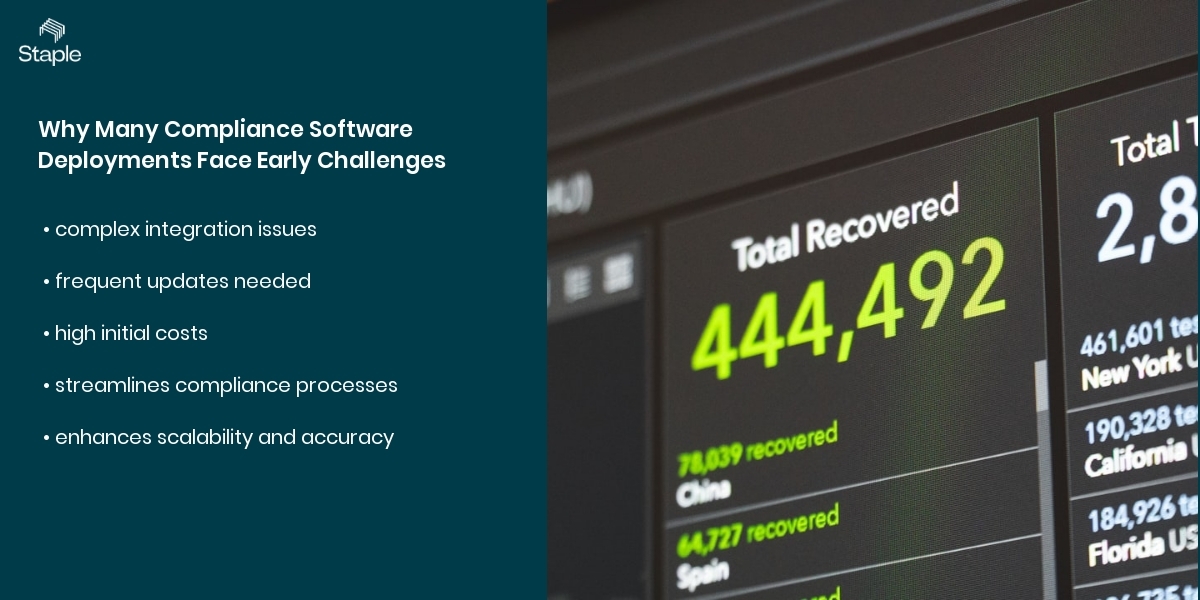
Integration Complexity. Blending AI tools with existing systems is often more complex than anticipated, leading to operational disruptions.
Regulatory Changes. Constant regulatory updates can render your newly deployed systems outdated quickly if they aren't as adaptable as claimed in the vendor brochures.
Top-Heavy Costs. Many enterprises underestimate the financial investment needed for AI sanctions compliance tools and therefore cut corners, risking the effectiveness of the implementation.
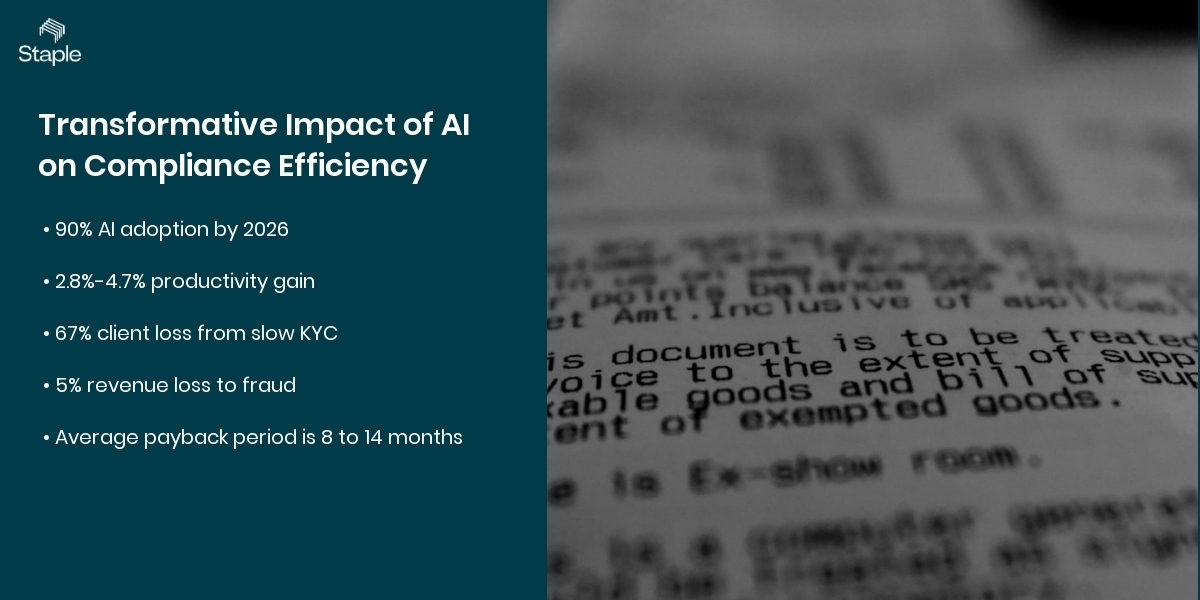
Transformative Impact of AI on Compliance Efficiency
Here's the breakthrough: AI sanctions screening reconciliation and document matching eliminate these costly barriers. By integrating AI into your sanctions compliance strategy, your organization doesn't just catch discrepancies and potential risks, it eradicates the very possibility of oversight. Modern AI systems offer real-time updates and integration capabilities that simplify compliance processes. What's more, with the efficiency of AI tools, scaling operations and adapting to policy changes becomes feasible, giving your company a unique competitive edge.
Staple AI provides a holistic solution in this realm. Their AI sanctions compliance tools effortlessly streamline the complexities of document matching for sanctions compliance. You won't just adhere to regulations; you'll do so with streamlined efficiency and lower overheads.
AI-enabled systems take over repetitive, manual tasks, ensuring audit-ready screening reconciliation. The strategic implication here is immense, allowing finance teams to redirect their focus from transactional reconciliation to value-added initiatives that support long-term growth.
Research-Backed Insights: AI and Compliance
According to the Gartner 2024 Finance AI Adoption Survey, 90% of finance functions will deploy at least one AI-enabled tech solution by 2026. There's no denying the industry's trajectory toward automated solutions for compliance and beyond. Those who delay might find themselves outpaced by rivals who invest early.
McKinsey research highlights a 2.8% to 4.7% potential productivity gain in the financial sector through automation. This isn't just an efficiency gain; it's a strategic move toward achieving operational excellence while maintaining compliance effectively.
Additionally, a report from Fenergo points out that 67% of banks have lost clients due to slow or inefficient KYC processes, underlining the importance of efficient screening and compliance systems. The opportunity cost of a sluggish, outdated process is indeed enormous.
In terms of fraud detection, ACFE's report states that organizations lose about 5% of their annual revenues to occupational fraud. Fending off such risks with effective AI-driven document matching offers both a sustainable and scalable solution.
Frequently Asked Questions
How do I build the business case for board approval?
Start by outlining the financial and operational impact of AI sanctions screening reconciliation tools. Quantify the cost savings from reduced manual labor and fewer compliance fines. Emphasize strategic advantages like speed and accuracy improvements, which enhance decision-making capabilities. Use case studies from peer companies to showcase proven benefits. Finally, highlight the potential for scalability and competitive differentiation.
What is the right build vs. buy framework for this decision?
Consider your organization's unique needs, existing infrastructure, and long-term goals. If your current systems can integrate new functionalities, building may be cost-effective but potentially time-consuming. Buying a ready-to-deploy solution like Staple AI’s tools could offer quicker ROI with supported upgrades. Evaluate both for scalability, speed of deployment, and resource investment.
How does AI improve sanctions compliance processes?
AI automates the matching of transactions against sanction lists, reducing human errors and false positives. It provides real-time data processing and continuously updates to reflect new regulations, ensuring audit readiness. The technology also enables thorough data analysis, offering strategic insights into compliance processes.
What are the risks associated with not automating sanctions reconciliation?
Failing to automate can result in slower processes, higher costs, and increased risk of regulatory non-compliance. Organizations may face significant penalties and suffer reputational damage. Manual systems are less accurate and often fail to scale efficiently with growing transaction volumes, resulting in compliance backlogs.
What role does AI play in audit-ready screening reconciliation?
AI facilitates a streamlined, consistent process by ensuring all data is accurately matched and verified, reducing the need for manual inspection. This system generates a robust audit trail, necessary for transparency and future verification. By improving overall efficiency and accuracy, it fosters a proactive compliance environment.
How Staple AI Can Help
Staple AI specializes in AI sanctions screening reconciliation, allowing organizations to enhance their document matching capabilities. Their technology offers smooth integration with existing compliance systems, enabling businesses to manage regulatory demands efficiently. By automating these processes, Staple AI ensures a reduction in human error, cost efficiencies, and improved compliance control.
When implementing Staple AI's solutions, the transition is smooth, with minimal disruption to existing operations. The tools are designed to adapt to your company’s unique requirements, ensuring scalability and ongoing support. This approach not only streamlines daily operations but also offers a competitive advantage in real-time regulatory environments.
Interested in elevating your compliance processes? Discover how Staple AI can transform your risk management strategy today by visiting our website or contacting our sales team for a personalized consultation.

.png)