
Tailoring AP Automation to Business Needs
Quick answer
Tailoring AP automation to business needs involves leveraging customized solutions that adapt to specific workflows, improving efficiency and accuracy. This personalized approach mitigates common processing errors, reduces manual entry, and enhances strategic resource allocation, aligning with distinct organizational goals and fostering greater productivity.
Tailoring AP Automation to Business Needs
Let me tell you a story. A finance director at a bustling multinational corporation, juggling endless paperwork, invoices, and reports. She had seen it all - late nights scrutinizing a mountain of invoices for a discrepancy or two, manually entering data line by line into archaic systems.
Honestly, it felt more like a grind than a job. Can you relate? For many in senior finance and operations roles, this isn't just a story, it's a daily reality.
The burden of inefficiencies and human errors feels like a chronic headache. However, what if there was a way to relieve this pressure? Enter customized AP automation tailored specifically for your business needs.
Imagine the way your workday would transform with these tailored solutions. It's not just wishful thinking; it's a necessary evolution in the business world. Here’s how automation can be flexible enough to fit seamlessly into unique workflows.
No more fits and starts with off-the-shelf products that 'kind of' solve your problems. No more bending your processes to fit the limitations of a generic system. With tailored AP solutions, management teams can see real efficiency gains and cost savings. That's not fluff; that's reality.
Understanding Customized AP Automation
In my experience, customized AP automation is a game-changer for many enterprises struggling with document management inefficiencies. But what exactly does this mean? Simply put, it adapts to the unique requirements of a business, addressing specific needs and challenges in accounts payable processes. It offers a more personalized approach than general AP solutions, tailoring workflows to elevate performance.
Manual AP Processing: A Real Struggle
• Manual AP processing involves labor-intensive tasks that are prone to human error.
• Timely payments are often delayed due to manual bottlenecks.
• Human intervention in data entry leads to inaccuracies that require further audits.
• The cost of manual AP processing can significantly impact the bottom line.
• It becomes increasingly difficult to scale with growing transaction volumes.
• Manual filing and retrieval of invoices consume valuable time.
• There is a lack of real-time visibility into AP liabilities.
Customized AP Automation: The Adaptable Solution
• Customized AP automation eliminates manual data entry errors, improving accuracy.
• Automated workflows reduce the payment cycle time significantly.
• Tailored solutions can integrate seamlessly with existing ERP systems, enhancing connectivity.
• The adaptability allows businesses to manage larger volumes efficiently.
• Real-time tracking and analytics offer insights into AP processes.
• Cost reductions occur as less manual labor is required to review invoices.
• Scalability becomes a non-issue, supporting company growth effectively.
How Manual Invoice Processing Costs Businesses
Have you ever considered the real price tag of sticking to manual invoice processing? It’s not pretty. According to a report by the Institute of Finance & Management, companies using manual entry methods spend up to $20 per invoice on processing. Multiply that by thousands of invoices monthly, and the numbers balloon into a substantial financial burden. Beyond finances, inefficient processing drains valuable time from AP personnel, trapping them in cycles of error correction and redundancy rather than strategic initiatives.
Moreover, the slow turnaround in invoice approvals disrupts the strategic cadence of operations. In some cases, compelling suppliers to extend payment terms frequently results in strained relationships. Essentially, the hidden costs of not embracing customized AP automation include a loss of competitive advantage, as time and talent continue to be misallocated. Tailored AP solutions save hard dollar costs and streamline operations, paving the way for proactive financial management.
How Customized AP Automation Works for Enterprises

Step 1: Needs Assessment. The first step involves evaluating existing processes to identify bottlenecks. Business analysts and financial experts collaborate to map out inefficiencies within current workflows. The result is a comprehensive requirement specification document that guides the automation customization process.
Step 2: Design of Custom Workflows. With a tailored solution in mind, technical teams craft workflows that address specific company pain points. Software architects include user-defined parameters that reflect business rules. This design stage culminates in the development of a prototype for validation.
Step 3: Integration with Existing Systems. Implementing customized AP automation requires seamless integration into existing IT infrastructure. Software engineers work to ensure optimal connectivity with enterprise resource planning systems. Successful integration enhances the data flow to encourage seamless financial operations.
Step 4: Training and Deployment. Staff undergo detailed training on how to operate the customized solution effectively. Change management practices accompany this stage to foster acceptance. The deployment phase sees the full launch of the automated system within the finance department.
Step 5: Monitoring and Optimization. Post-deployment, continuous monitoring identifies further areas of improvement. Performance metrics are tracked, showing trends and deviations. Feedback loops from users guide iterative enhancements, perfecting the solution over time.
The Pitfalls of Adopting Customized Solutions
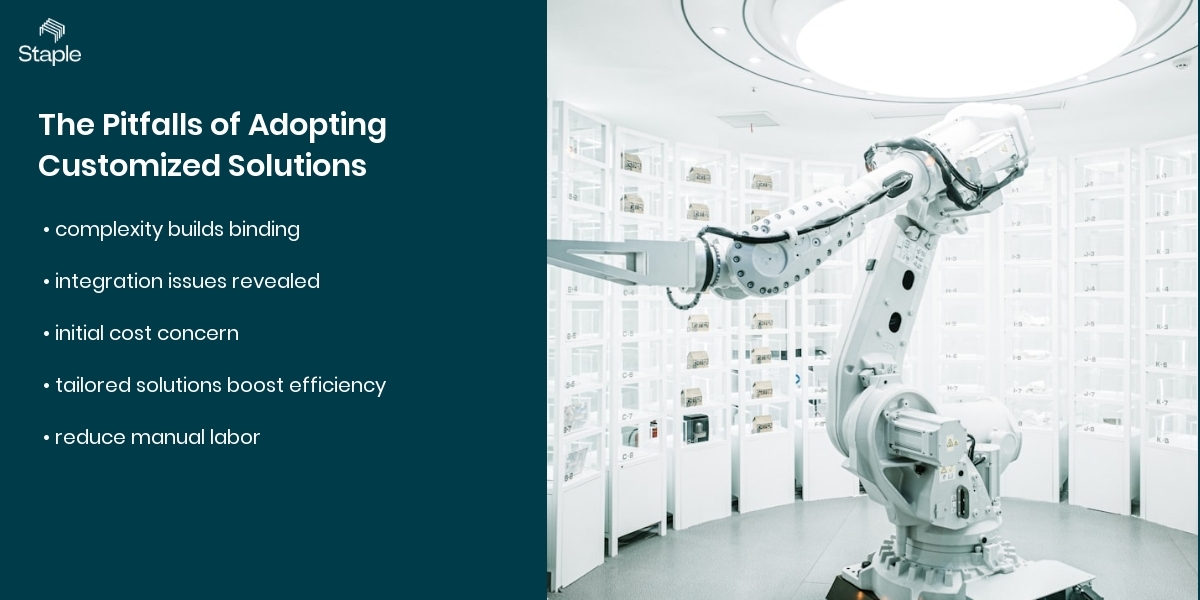
Complexity Challenge. Tailoring solutions involves complex processes, which can be overwhelming. Navigating these intricacies requires substantial expertise and resources.
Integration Issues. Integrating new tailored solutions into existing systems can present hurdles. Ensuring compatibility and seamless data flow requires meticulous coordination and testing.
Cost Concerns. Initial costs of customized automation solutions can be significant. However, they should be weighed against the long-term savings and efficiency benefits they provide.
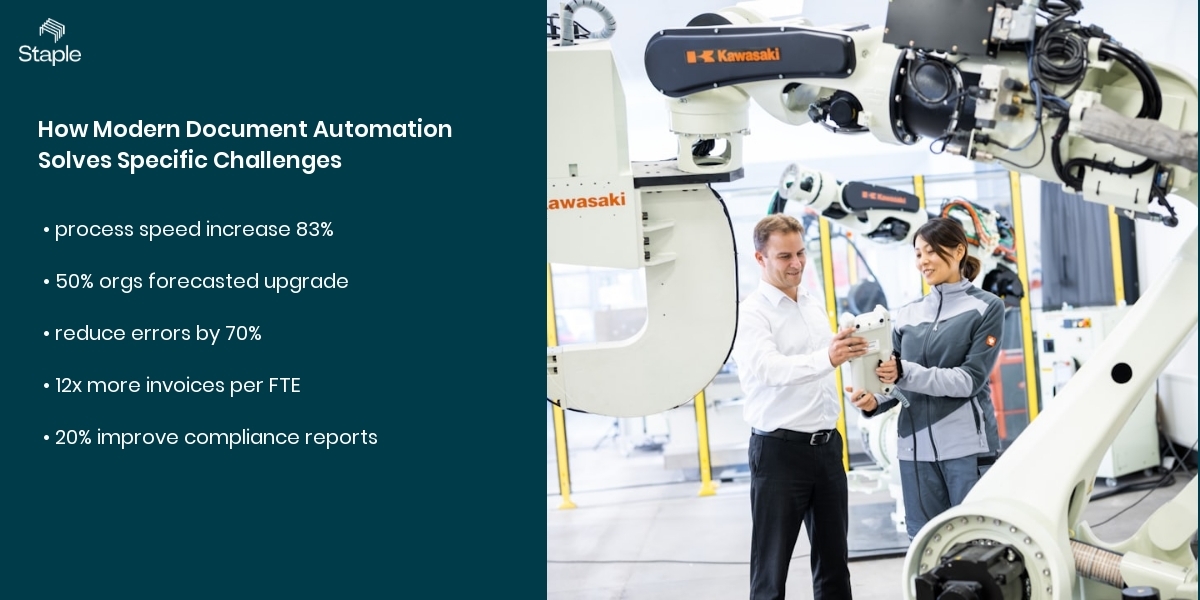
How Modern Document Automation Solves Specific Challenges
Clearly, AP automation tailored to business needs revolutionizes how companies manage their finances. But there’s more to the story than just streamlining invoices. When businesses incorporate tailored AP solutions, they drastically reduce manual intervention. Proactive error detection prevents incorrect data from slowing reconciliation processes. Resources allocated toward manual review tasks are reallocated to more strategic roles, enhancing overall productivity.
Enter Staple AI. This is a robust solution renowned for its ability to tailor its services to match unique business models. Using AI systems, it offers adaptive workflows, and intelligent tables, and even facilitates seamless integration with popular accounting software. You can read more about one client's journey in our case studies on success stories in AP automation.
The real transformation lies in the measurable impact: time saved, costs lowered, and human errors significantly reduced. Organizations experience significant ROI over time, making the upfront costs of customization worthwhile. Through tailored automation, enterprises can manage complex, high-volume transactions efficiently and with fewer headaches along the way.
Real Numbers: Research and Data on AP Automation Benefits
According to industry research, implementing customized AP automation can improve processing speed by up to 83%. That’s a huge leap forward from manual methods, traditionally bound by error-prone, time-consuming tasks. The ripple effect of such efficiency translates directly into dramatic cost savings for enterprises.
Gartner research forecasts that a growing majority of organisations will upgrade from standard systems to customized, AI-powered AP solutions, driven by proven cost reduction benefits. Following an initial bump in spending, companies enjoy streamlined operations and noticeable improvements in their bottom line.
In data from IOFM, tailored AP solutions are shown to reduce payment errors by 70%, providing businesses with relief from common accounts payable headaches. Payment errors not only incur extra cost but also cultivate distrust among vendors, negatively impacting relationships and business growth. Cutting errors subsequently smooths financial interactions.
The Accounts Payable Network reveals that companies using tailored AP solutions can process 12 times more invoices per FTE, highlighting the scalability of such approaches. Apart from encouraging growth in transaction volumes, this scalability responds to the evolving needs of dynamic businesses.
McKinsey research indicates meaningful improvements in overall compliance reporting accuracy through customized, automated systems. Reducing compliance risks equips businesses to navigate regulations with increased confidence and fewer penalties.
Frequently Asked Questions
What are the primary benefits of customized AP automation?
Customized AP automation offers numerous benefits, such as increased accuracy and reduced error rates by tailoring the system to specific business processes. It enhances efficiency by minimizing manual interventions and reduces processing times, making way for smarter allocation of resources.
How does tailored AP automation differ from off-the-shelf solutions?
Unlike off-the-shelf solutions, tailored AP automation is designed to match the specific workflows and requirements of a business. It incorporates unique features that solve individual challenges and ensures seamless integration with existing systems, catering to customized strategies.
Is the investment in customized AP automation justified?
Yes, though initial costs may be significant, the long-term benefits of efficiency, reduced error rates, and savings in labor costs provide notable ROI. Tailored automation aligns with unique business goals, promoting sustained financial performance and operational excellence.
How can AP automation enhance supplier relationships?
By streamlining invoice processing and ensuring timely payments, AP automation cultivates trust and reliability between businesses and their suppliers. The consistency of payments and faster resolution of disputes or errors lead to stronger supplier partnerships.
What role does AI play in customized AP solutions?
AI enhances customized AP solutions by offering intelligent data extraction, pattern recognition, and predictive analytics. These functionalities enable smarter decision-making, reduce manual effort, and improve oversight, making AP functions more strategic and informed.
How Staple AI Can Help
Staple AI specializes in deploying customized AP automation solutions that tackle unique business challenges head-on. Our comprehensive suite of services includes features such as Intelligent Tables for streamlined data extraction and Auto-Reconciliation to match invoices accurately in real time. Through our tailored AP solutions, businesses interact with a system that understands and adapts to their needs.
Implementation with Staple AI involves thorough needs assessments to customize workflows, followed by seamless integration with existing information management systems. Our approach ensures the client's operational flow remains unimpeded. Typically, integration can be smooth and swift, with tailored AP solutions functioning optimally in weeks rather than months.
Are you ready to optimize your accounts payable process with tailored solutions? At Staple AI, we invite CFOs and finance directors ready to revolutionize their operations. Contact us today to learn more about how our customized AP automation can be designed for your business needs. Let’s transform your processes into strategic advantages.

.png)