
First-Mile Platform Overview
What is the first mile of data processing?
It's the moment documents and data from the outside world enter your business, before your ERP, workflows, or AI systems ever touch them. It's also where most enterprise data risk begins. Staple exists to resolve that risk at the source.
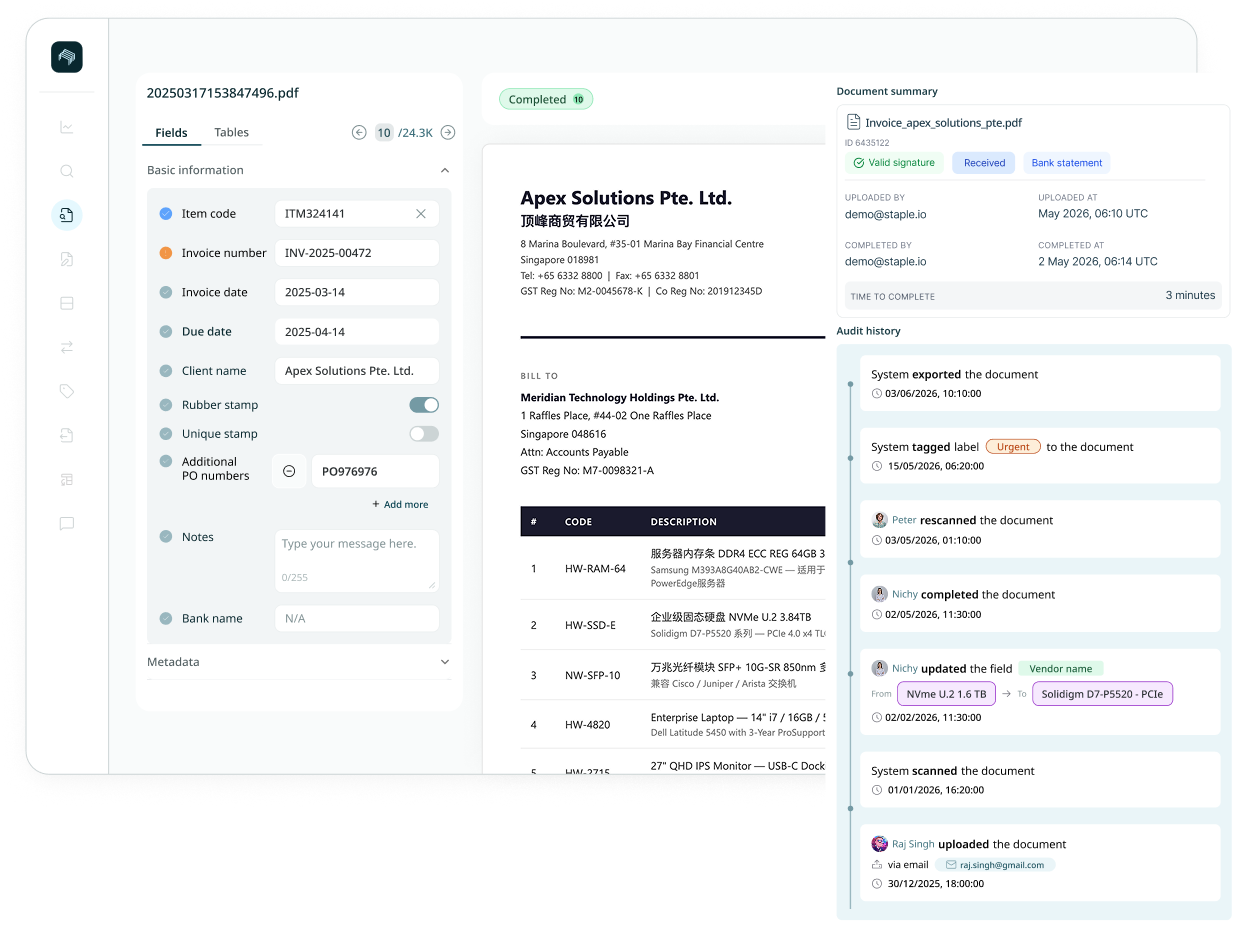
The first mile, defined
Every enterprise runs on data. Most of that data isn't created inside your own systems, it arrives from outside: supplier invoices, customer statements, KYC files, contracts, government forms. The first mile of data processing is everything that happens to that external input between the moment it arrives and the moment it's clean enough for a system to act on.
Internal data is structured and trusted by design. External data is not. It comes in formats, languages, and layouts you don't control, from parties who change them without warning. The first mile is the work of turning that raw, untrusted input into verified, system-ready data.
- The last mile delivers a finished result to an end user.
- The first mile is the opposite end: getting raw external input trustworthy enough to use at all.
- Most automation tools start after the first mile. Staple owns the first mile itself.
How Staple resolves the first mile, end to end
Three stages turn raw external input into verified, system-ready data. Trust runs through all of them.
Document Layer
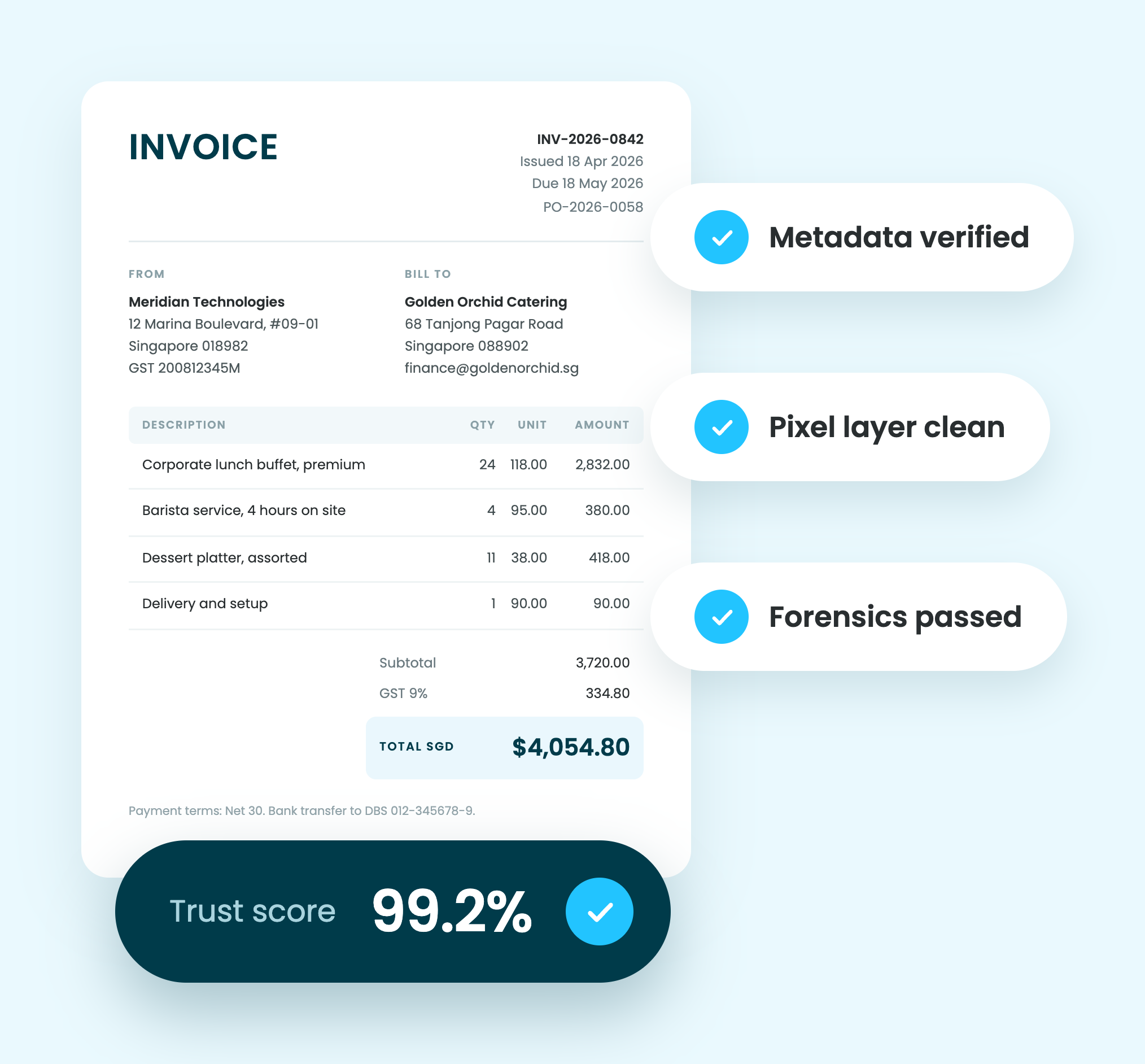
The first risk is a document you can't trust. Before anything is read, Staple confirms the file is genuine and hasn't been altered, so a forged or tampered source never makes it past the door.
Data Layer
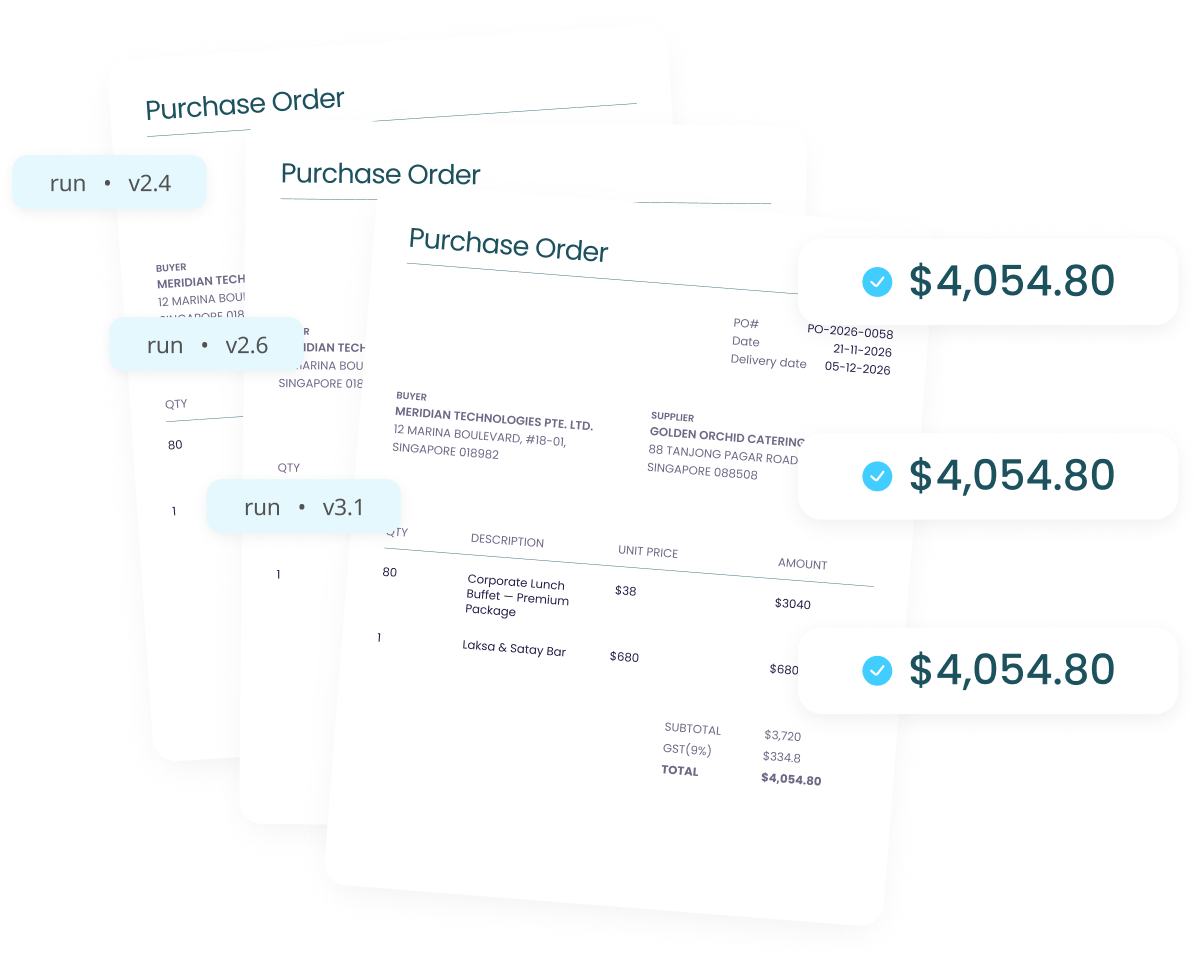
The next risk is data that's wrong or inconsistent. Staple verifies every field against external sources and reconciles it across related documents, so mismatches surface at intake, not in a downstream audit.
Trust Layer
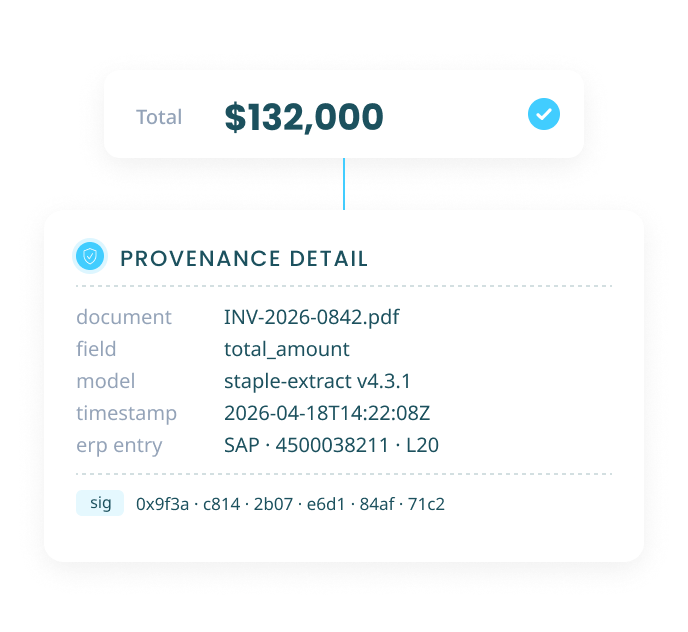
The lasting risk is not being able to prove any of it later. Staple seals every field with its full history, so when a regulator asks where a number came from, the answer is already in the record.
Connect & Deliver
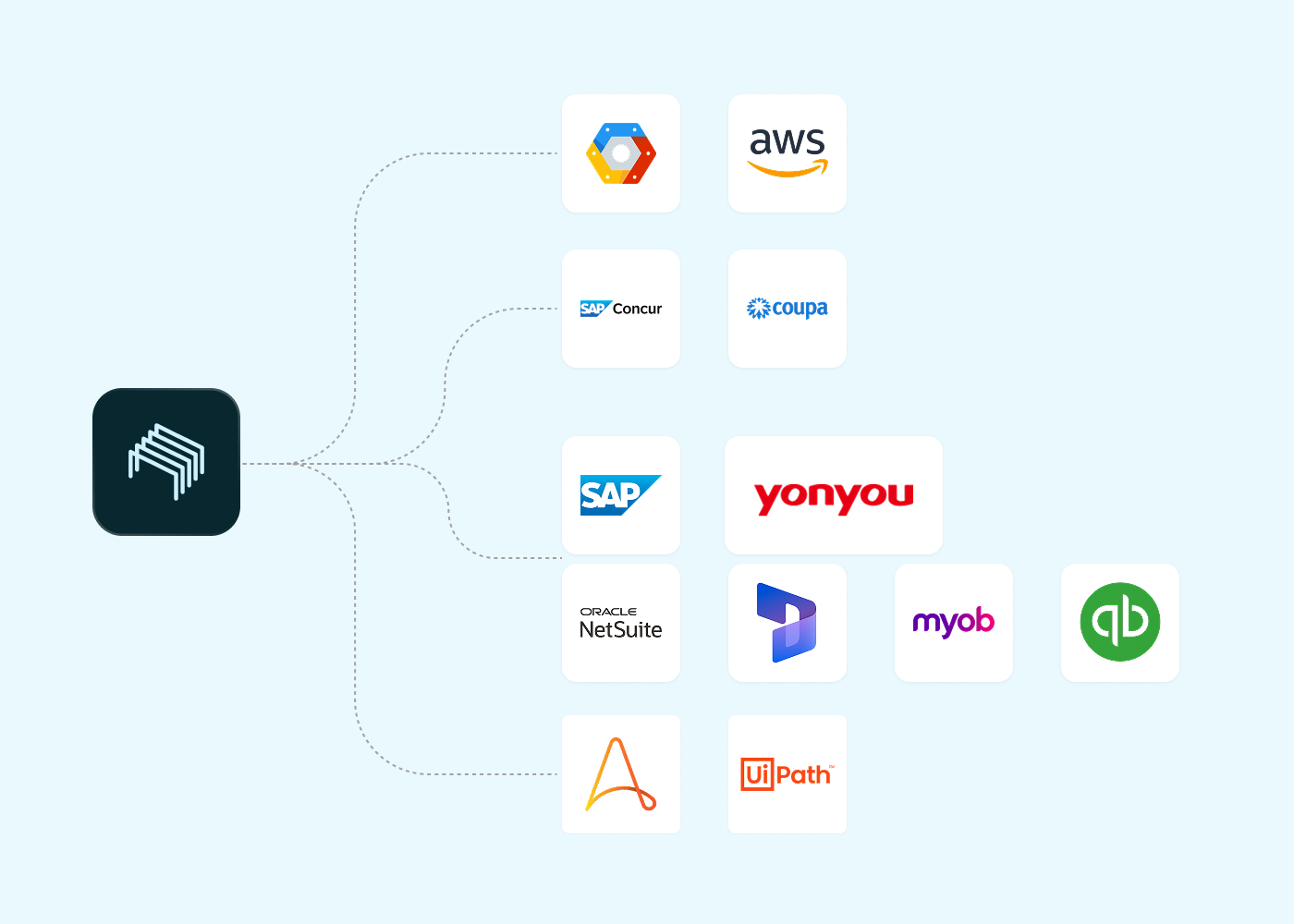
The final risk is a broken handoff. Staple delivers verified output straight into your systems in the format each one needs, so nothing is re-keyed or re-introduced downstream.

Why the first mile is the highest-risk point in your data pipeline
Once data enters a downstream system, it's trusted by default and acted on automatically. So an error, a tampered figure, a misread field, introduced at intake propagates through every process that touches it. By the time it surfaces, usually in an audit, it's expensive to trace and hard to explain.
- Before Staple: external documents arrive scattered across email, portals, drives, and APIs, processed and corrected by hand.
- What Staple handles: the entire first mile, source checks, extraction, verification, reconciliation, and a sealed audit trail.
- What stays downstream: your ERP, accounting, and compliance systems, now receiving data they can trust without re-checking.


See the first mile run on your own documents.
Book a 30-minute demo. Bring your documents and we'll run them through the full platform, across your layouts and languages.
FAQ
What is the first mile of data processing?
The first mile of data processing is the point where documents and data from the outside world enter an organization. Unlike internal data created in controlled systems, external inputs arrive in formats, languages, and layouts the receiving organization does not control. It is where tampering, falsified data, extraction errors, and unverifiable output create the highest downstream risk. Staple processes and verifies at this point, before data moves into ERP, accounting, or compliance systems.
Is the first mile the same as data ingestion?
No. Ingestion is only the act of receiving a document. The first mile includes ingestion but goes further: checking the source for tampering, extracting the content, verifying it against external sources, reconciling it across related documents, and sealing it with an audit trail. Ingestion gets the document in the door; the first mile makes it trustworthy.
How is the first mile different from the last mile?
The last mile is about delivering a finished output to its final destination or user. The first mile is the opposite end of the pipeline: taking raw, uncontrolled external input and making it accurate and verifiable enough to use. Most software addresses the last mile. Staple addresses the first.
Why can't our existing OCR or extraction tool handle the first mile?
Extraction tools convert a document to data and stop. The first mile also requires source verification before extraction, external validation and reconciliation during, and a tamper-evident audit trail after. Without those, you have extracted data, not verified data, and no way to prove where a value came from.
Does the first mile apply to structured data, or only documents?
Both. Structured feeds, unstructured documents, scans, photos, handwriting, and e-invoices all enter through the first mile. Staple handles every input type in the same pipeline across 300+ languages.